Live Updates
UPDATE — Aug 9, 5:21 PM CT: Iran fires cruise missiles at oil tanker near Oman, setting vessel ablaze in Hormuz
Iran fired cruise missiles at an oil tanker in the Strait of Hormuz, setting the vessel ablaze near Oman, according to a report from Gulf News published minutes ago.
The strike marks the latest in a string of attacks on shipping through the world's most critical oil chokepoint, following ADNOC's warning that 15 vessels have been hit since the war began, with one crew member killed.
Kingdom Exploration's read: repeated cruise-missile strikes near Oman keep the risk premium on crude elevated, as roughly a fifth of global oil flows through Hormuz and each fresh attack raises the odds of shippers rerouting or pausing transits.
UPDATE — Aug 8, 8:31 AM CT: Iranian missile targets UAE tanker despite talks to reopen strait, per FT
An Iranian missile has targeted a UAE tanker in the Strait of Hormuz even as talks were under way to reopen the waterway, the Financial Times reports. The strike lands as diplomatic efforts sought to ease tensions along the world's most critical oil chokepoint.
Kingdom Exploration's read: the timing undercuts hopes that the strait could quickly return to normal traffic. Roughly a fifth of global oil supply passes through Hormuz, and fresh strikes during negotiations keep a war-risk premium firmly attached to crude while insurers and shippers weigh continued transits.
UPDATE — Aug 8, 6:31 AM CT: UAE blames Iran for tanker attack in Strait of Hormuz
The UAE has directly blamed Iran for the attack on an Abu Dhabi National Oil Company (ADNOC) tanker in the Strait of Hormuz, per ndtv.com. It marks the first time authorities have publicly named a suspected culprit for the strikes on vessels transiting the world's most critical oil chokepoint.
Kingdom Exploration's read: attributing the attack to Iran raises the stakes considerably. Roughly a fifth of global oil supply passes through Hormuz, and a naming of Tehran as the aggressor increases the risk of escalation, higher war-risk insurance premiums, and rerouting that could tighten crude availability.
UPDATE — Aug 8, 6:02 AM CT: UAE condemns missile attack on ADNOC-linked tanker in Strait of Hormuz
The UAE has formally condemned a missile attack on an ADNOC-linked tanker in the Strait of Hormuz, per Gulf News. The report follows ADNOC's earlier account of multiple vessels struck while transiting the waterway this week.
Kingdom Exploration's read: an official government condemnation raises the diplomatic stakes and signals the strikes are being treated as deliberate rather than incidental. The Strait of Hormuz is the transit route for roughly a fifth of global oil supply, so any escalation in vessel targeting there keeps a risk premium under crude prices and pressures shipping and insurance costs.
UPDATE — Aug 7, 10:46 AM CT: ADNOC says 15 vessels hit since war began, one crew member killed
ADNOC now says 15 of its vessels have been struck by missiles or drones since the war began, with three of those hits coming this week, according to oilprice. One crew member has been killed and 20 others injured, the company said Friday.
ADNOC said the attacks are having a "significant impact" on operations as it tries to keep crude, gas and refined products moving through the Strait of Hormuz, which carried roughly one-fifth of global oil consumption before the conflict widened. Repeated strikes have disrupted traffic, driven freight costs sharply higher and made some shipowners reluctant to enter the Persian Gulf.
Kingdom Exploration's read: the UAE is one of the few Gulf producers to restore exports near pre-war levels, leaning on Fujairah loading points outside Hormuz. Escalating attacks threaten even that resilience, keeping a supply-risk premium in crude.
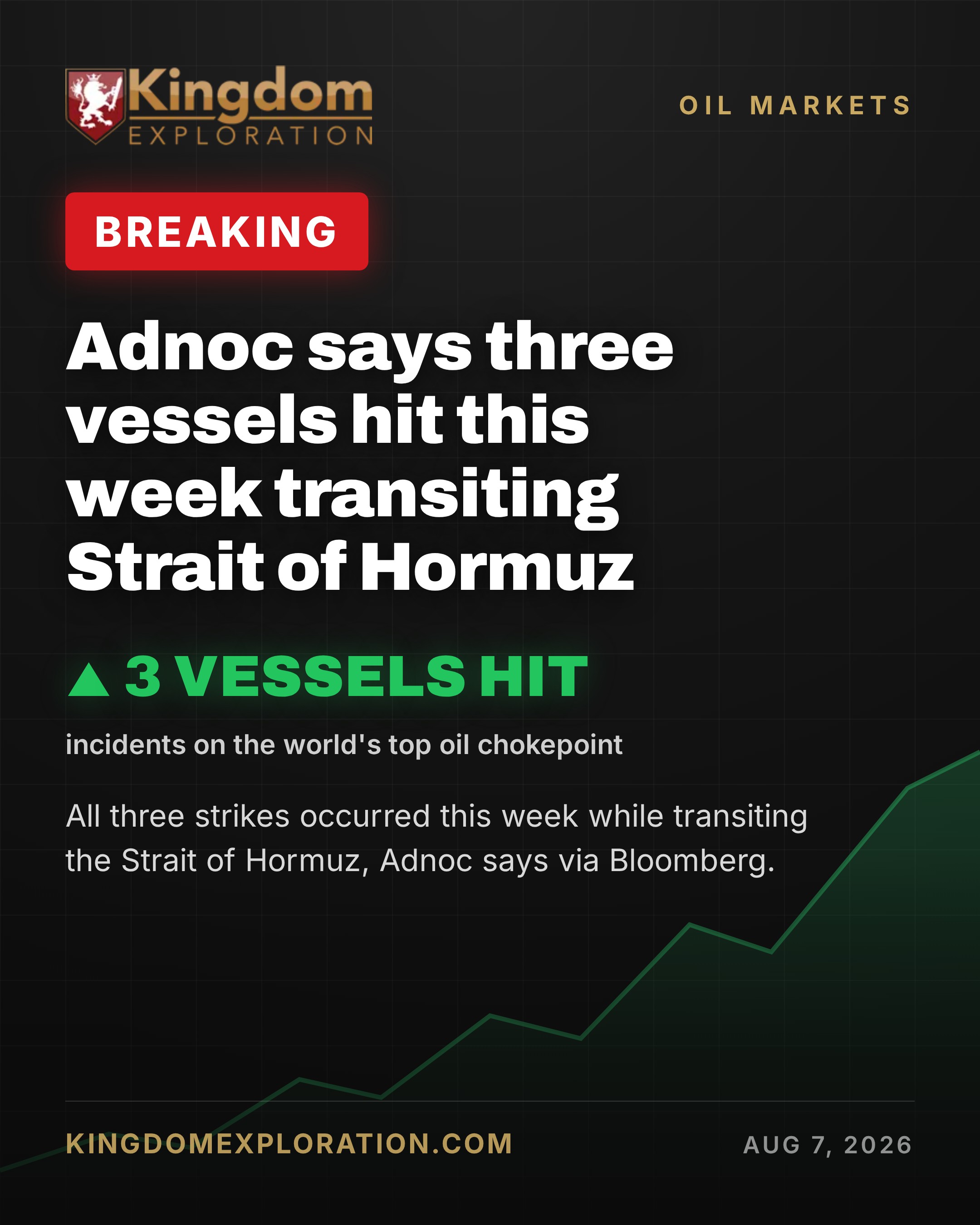
Three vessels were hit this week while transiting the Strait of Hormuz, according to Abu Dhabi National Oil Company (Adnoc), Bloomberg reported. The disclosure, published within the last hour, puts fresh focus on the world's most critical oil chokepoint and the security of tankers moving crude out of the Persian Gulf.
What Just Happened
Per Bloomberg, Adnoc says three vessels were struck this week as they moved through the Strait of Hormuz. The strait is the narrow waterway connecting the Persian Gulf to the Gulf of Oman and open-ocean shipping lanes, and it is the single most important transit point for seaborne crude and refined-product exports from the Middle East.
The company's statement flags a cluster of incidents concentrated in one week, rather than an isolated event. That pattern matters because it signals elevated risk along a route that a large share of global oil supply depends on every single day.
The Numbers
The concrete figure disclosed so far is three vessels hit this week, according to Adnoc via Bloomberg. No official casualty counts, cargo losses, or volume disruptions have been detailed in the reporting available at this time.
- 3 - vessels reported hit this week while transiting the strait, per Adnoc.
- Strait of Hormuz - the chokepoint where the incidents occurred, the primary export corridor for Gulf crude.
Kingdom Exploration will update this figure as verified details emerge.
Why Oil Prices Could Rise
The Strait of Hormuz is the pressure point of the global oil market. A meaningful share of the world's crude passes through it, and there is no easy overland alternative for most of that volume. When vessels transiting the strait are hit, three things typically move price:
- Supply at risk: Any threat to safe passage puts real barrels in jeopardy. Even without a confirmed disruption, the possibility of one gets priced in quickly.
- Risk premium: Traders add a security premium to crude when the odds of interrupted flows rise. Higher insurance and freight costs for tankers feed directly into landed oil prices.
- Thin spare capacity: With limited slack in the system to replace lost Gulf barrels on short notice, markets react sharply to headlines that question the reliability of Hormuz transit.
Kingdom Exploration's read: the market cares less about the exact damage to three ships and more about whether this becomes a repeatable pattern. A one-off is a headline; a trend along Hormuz is a supply-security story that reprices crude.
What to Watch Next
- Confirmation of which vessels were hit, their cargo, and whether any carried crude or product.
- Whether tanker operators reroute, slow transits, or demand higher war-risk insurance premiums.
- Any official response from Gulf states or naval forces operating in the region.
- Whether additional incidents are reported in the days ahead, turning a cluster into a sustained threat.
- Movement in Brent and WTI as traders price the security risk premium.
Reporting sourced from Bloomberg.com. Developing story.
About Kingdom Exploration
Kingdom Exploration LLC is an Oklahoma-based oil and gas exploration company. Learn more at kingdomexploration.com.