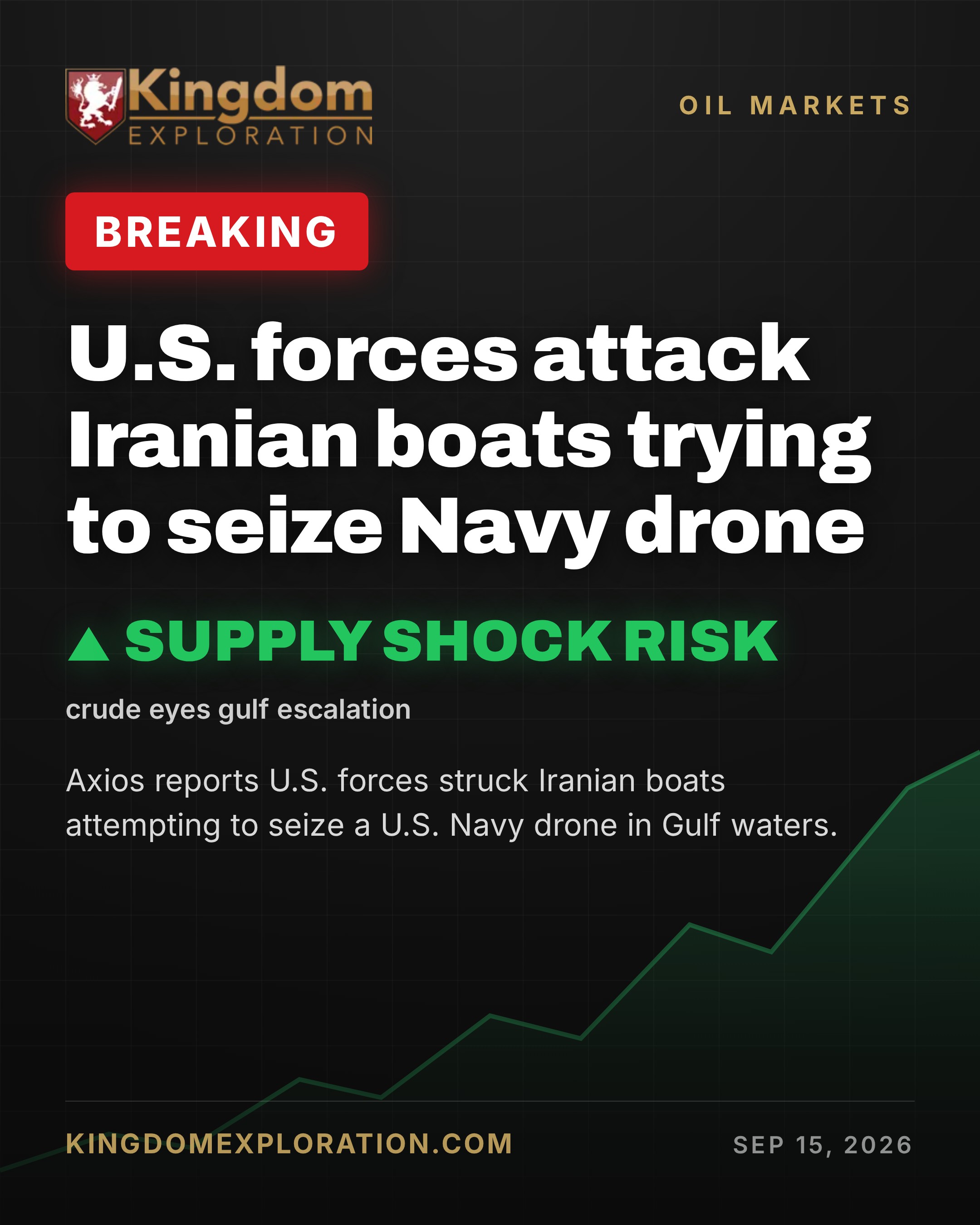
U.S. forces attacked Iranian boats that were attempting to seize a U.S. Navy drone, Axios reported in a scoop published within the last hour. The confrontation marks a fresh military flashpoint between Washington and Tehran in waters that sit at the heart of the world's oil trade.
What Just Happened
According to Axios, Iranian boats moved to seize a U.S. Navy drone, prompting U.S. forces to respond with an attack on the vessels. The report frames the incident as a direct kinetic exchange between American and Iranian assets at sea.
Beyond the core facts confirmed by Axios, additional details on the location, timing, casualties, and the type of drone involved were not specified in the initial report. This is a developing story, and the picture may sharpen as more reporting emerges.
The Numbers
The initial Axios report did not include specific figures on the number of boats involved, munitions used, or any damage assessment. No official casualty or equipment-loss counts have been detailed at this stage.
What matters for oil markets is context: the Persian Gulf and the adjacent Strait of Hormuz are among the most sensitive chokepoints in global energy, with a large share of the world's seaborne crude passing through the region. Any direct U.S.-Iran military exchange in these waters immediately raises the stakes for supply.
Why Oil Prices Could Rise
Direct confrontations between the U.S. and Iran in Gulf waters tend to inject an immediate risk premium into crude prices. The mechanism is straightforward:
- Supply at risk: The waters where Iranian and U.S. forces operate lie near the Strait of Hormuz, the transit route for a substantial portion of global crude exports. Traders price in the possibility that shipping could be disrupted.
- Escalation risk premium: A shooting incident raises the probability of retaliation or a wider standoff, and markets typically demand a premium to hold barrels when that tail risk grows.
- Insurance and rerouting costs: Heightened naval tension can push up tanker insurance rates and complicate shipping in the region, feeding into delivered oil costs.
Kingdom Exploration's read: a single naval clash does not by itself remove barrels from the market, but the Gulf is unforgiving of surprises. When U.S. and Iranian forces trade fire near the world's busiest oil corridor, the market's first instinct is to add a fear premium and ask questions later.
What to Watch Next
- Iran's response: Whether Tehran acknowledges the incident and how it characterizes the exchange will shape the escalation path.
- Official U.S. confirmation: A Pentagon or Central Command statement would firm up the details and the location.
- Shipping signals: Any advisories to commercial tankers, changes in naval escort posture, or insurance-rate moves in the Gulf.
- Price action: Whether crude holds an initial risk bid or fades it as the market gauges the odds of a wider confrontation.
Reporting sourced from Axios. Developing story.
About Kingdom Exploration
Kingdom Exploration LLC is an Oklahoma-based oil and gas exploration company. Learn more at kingdomexploration.com.

