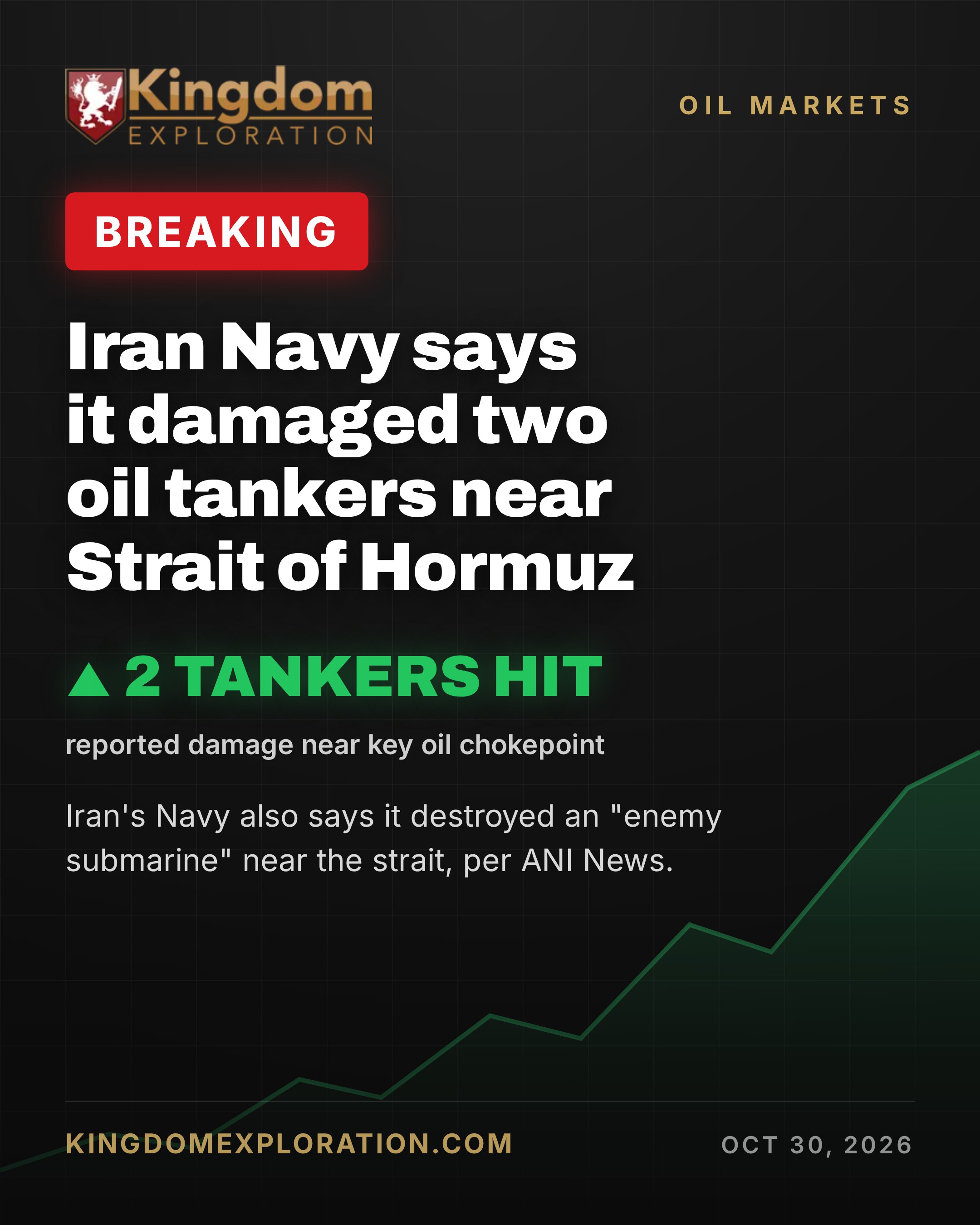
Iran's Navy said it damaged two oil tankers and destroyed what it described as an "enemy submarine" near the Strait of Hormuz, according to a report published by ANI News. The statement, carried roughly nine minutes before this writing, points to a fresh security incident in the world's most sensitive oil shipping corridor.
What Just Happened
Per ANI News, the Iranian Navy announced it had destroyed an "enemy submarine" and caused damage to two oil tankers in waters near the Strait of Hormuz. The source report does not name the tankers, the flag states, the operators, or the party said to be operating the submarine. The claim originates from the Iranian Navy itself and had not been independently detailed in the available reporting at the time of writing.
Even with those gaps, the location alone makes this a market-relevant event. The Strait of Hormuz is the single most important maritime passage for crude oil and liquefied natural gas, connecting Gulf producers to global buyers. Any reported strike on tankers transiting or approaching that chokepoint tends to draw immediate attention from shippers, insurers, and energy traders.
The Numbers
The source provides limited hard figures. Confirmed in the report:
- 2 oil tankers said to be damaged, per the Iranian Navy.
- 1 "enemy submarine" the Navy says it destroyed.
- Incident located near the Strait of Hormuz.
No barrels-per-day loss, tanker capacities, vessel names, or oil-price moves were specified in the available source text. We are not attaching figures that the reporting does not contain.
Why Oil Prices Could Rise
Crude markets price risk, not just barrels. When tankers are reportedly damaged in or near the Strait of Hormuz, several mechanisms can push prices higher:
- Supply at risk: A large share of seaborne crude and LNG moves through this narrow passage. Any threat to safe transit raises the probability of delayed or re-routed cargoes.
- War-risk premium: Reported attacks on vessels typically lift marine insurance and war-risk surcharges, which raise delivered costs and can feed into crude benchmarks.
- Spare-capacity anxiety: If traders fear the chokepoint itself could be disrupted, the market questions how quickly alternative supply or routing could fill the gap.
Kingdom Exploration's read: the headline risk here is the geography. A reported tanker strike near Hormuz is the kind of event that can move sentiment before any physical barrel is actually lost, because the market knows how much crude depends on that passage staying open.
What to Watch Next
- Independent confirmation of the tanker damage and the vessels involved from shipping trackers, flag states, or operators.
- Insurance and shipping response - any change to war-risk premiums or re-routing around the Gulf.
- Official reactions from regional governments and naval forces operating in the area.
- Benchmark crude moves in the hours after the report as traders weigh the supply-risk signal.
Reporting sourced from ANI News. Developing story.
About Kingdom Exploration
Kingdom Exploration LLC is an Oklahoma-based oil and gas exploration company. Learn more at kingdomexploration.com.

