Live Updates
UPDATE — Jul 25, 8:02 PM CT: CENTCOM: 12 vessels now redirected, two 'non-compliant' ships disabled
The U.S. blockade against Iran has widened again, with CENTCOM reporting that 12 commercial vessels have now been redirected and two "non-compliant" ships disabled as it enforces what it calls a full blockade, per Dailyhunt.
The tally marks an escalation from the nine ships and single disabled vessel reported earlier, signaling tightening enforcement rather than any de-escalation.
Kingdom Exploration's read: each additional disabled or diverted vessel raises the risk premium on crude, as traders weigh disruption to tanker traffic near the Strait of Hormuz and the broader threat to Iranian oil flows.
UPDATE — Jul 25, 12:11 PM CT: Pentagon chief Hegseth says U.S. blockade on Iran is 'going global'
Defense Secretary Pete Hegseth said the U.S. naval blockade on Iran is "going global," per AOL.com, signaling an expansion of enforcement beyond the Gulf region. The remark escalates a campaign that has already seen multiple Iran-linked vessels redirected and at least one disabled.
The outlet did not detail the scope or timeline of the expanded effort. Kingdom Exploration's read: a globalized blockade raises the risk of broader disruption to Iranian crude exports and tanker traffic, adding a fresh supply-side risk premium as markets weigh potential enforcement actions well beyond the Strait of Hormuz.
UPDATE — Jul 22, 12:52 PM CT: CENTCOM says nine ships now redirected and one disabled under Iran naval blockade
The US naval blockade of Iran has widened, with CENTCOM reporting that nine commercial vessels have now been redirected and one disabled as of Wednesday, per the Telegram channel @intelslava. That marks an escalation from the eight ships redirected earlier in the day.
The disabling of a vessel adds a new dimension to the enforcement effort, signaling a more aggressive posture along a corridor that handles a large share of the world's seaborne crude.
Kingdom Exploration's read: more redirected tonnage and a disabled ship raise the risk premium on any barrels moving near Iranian waters. With escort operations already paused in the Strait of Hormuz, traders are watching for further supply-route disruption that could ripple into crude prices.
UPDATE — Jul 22, 11:33 AM CT: UN maritime body pauses Strait of Hormuz ship escort operation after vessel attack
The UN maritime organization has paused its ship escort operation in the Strait of Hormuz following an attack on a vessel, according to News On AIR. The move suspends the protective convoy arrangements that had been guiding merchant traffic through the world's most critical oil chokepoint.
No further details on the affected vessel, casualties, or the duration of the pause were provided in the report.
Kingdom Exploration's read: with escort operations halted, shipowners may hesitate to transit the strait, and any drop in Hormuz throughput would tighten crude and LNG supply lines. Roughly a fifth of global oil flows passes through the passage, so even a temporary escort suspension raises the risk premium on tankers and, in turn, on prices.
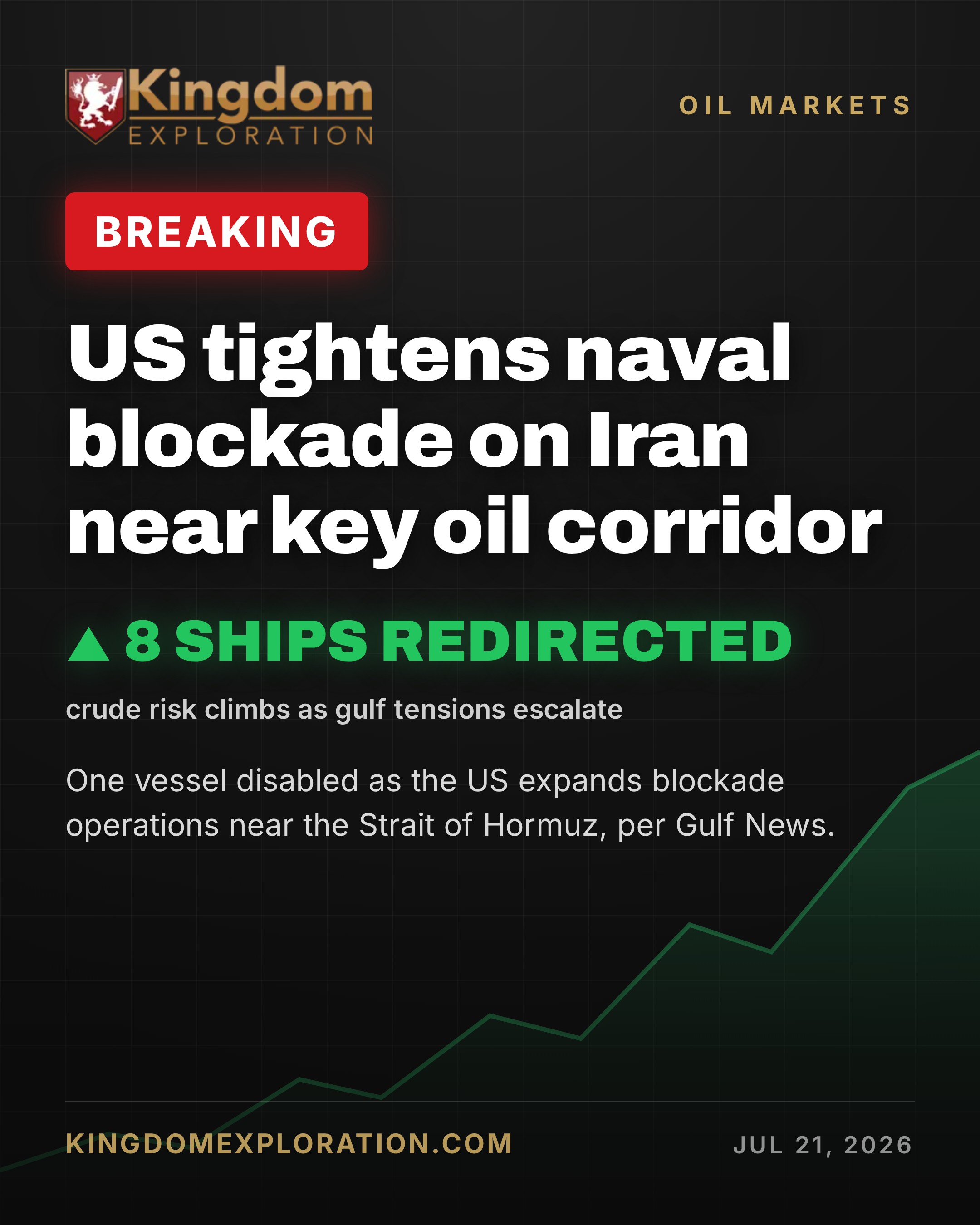
The United States has tightened its naval blockade on Iran, redirecting eight commercial ships and disabling one vessel, Gulf News reported minutes ago. The escalation deepens a maritime standoff in one of the world's most critical oil corridors and raises fresh questions about the security of crude flows through the Persian Gulf.
Related coverage: Iran Shuts Down Strait of Hormuz Amid US Tensions
What Just Happened
According to Gulf News, US naval forces have expanded their blockade operations against Iran, with eight commercial ships redirected away from their intended routes and one vessel disabled. The move marks a sharp escalation from the earlier standoff we covered when Iran moved to shut down the Strait of Hormuz amid rising tensions with Washington.
A tightening blockade signals a more assertive military posture in Gulf waters, and any disruption to commercial shipping in this region carries immediate implications for global energy markets. The Strait of Hormuz remains the single most important chokepoint for seaborne crude and refined products.
The Numbers
- 8 commercial ships redirected as a result of the tightened blockade, per Gulf News.
- 1 vessel disabled during the operation.
- Report published approximately 13 minutes before writing - a developing situation.
These are the only confirmed figures available from the source at this time. Additional details on the vessels involved, cargo types, and the operation's scope have not yet been disclosed.
Why Oil Prices Could Rise
The Strait of Hormuz is the artery through which a large share of the world's crude and liquefied natural gas passes. When commercial shipping is redirected or vessels are disabled, the market reprices the risk that barrels may not reach buyers on schedule.
Three mechanisms tend to push prices higher in situations like this:
- Supply at risk: Redirected and disabled ships raise the odds of physical disruption to crude flows, tightening near-term availability.
- Risk premium: Traders build a geopolitical premium into futures when military escalation threatens a chokepoint, even before any barrels are actually lost.
- Spare capacity concerns: If Gulf flows are constrained, the market leans harder on producers' spare capacity elsewhere, and any doubt about that cushion amplifies price sensitivity.
Kingdom Exploration's read: a widening blockade in the Hormuz corridor is exactly the kind of headline that puts a floor under crude and can spark sharp intraday moves. The market will watch whether commercial traffic keeps flowing or whether disruptions cascade.
What to Watch Next
- Whether additional vessels are redirected or disabled in the coming hours.
- Any official statements from Washington or Tehran on the scope and intent of operations.
- Insurance and freight rates for Gulf shipping, which often move fastest when maritime risk rises.
- How much of a risk premium crude futures build in as trading sessions open.
- Whether the Strait of Hormuz sees any resumption or further closure of traffic following Iran's earlier move.
This is a fast-moving story with limited confirmed detail. We will update as more verified information becomes available.
Reporting sourced from Gulf News. Developing story.
About Kingdom Exploration
Kingdom Exploration LLC is an Oklahoma-based oil and gas exploration company. Learn more at kingdomexploration.com.

