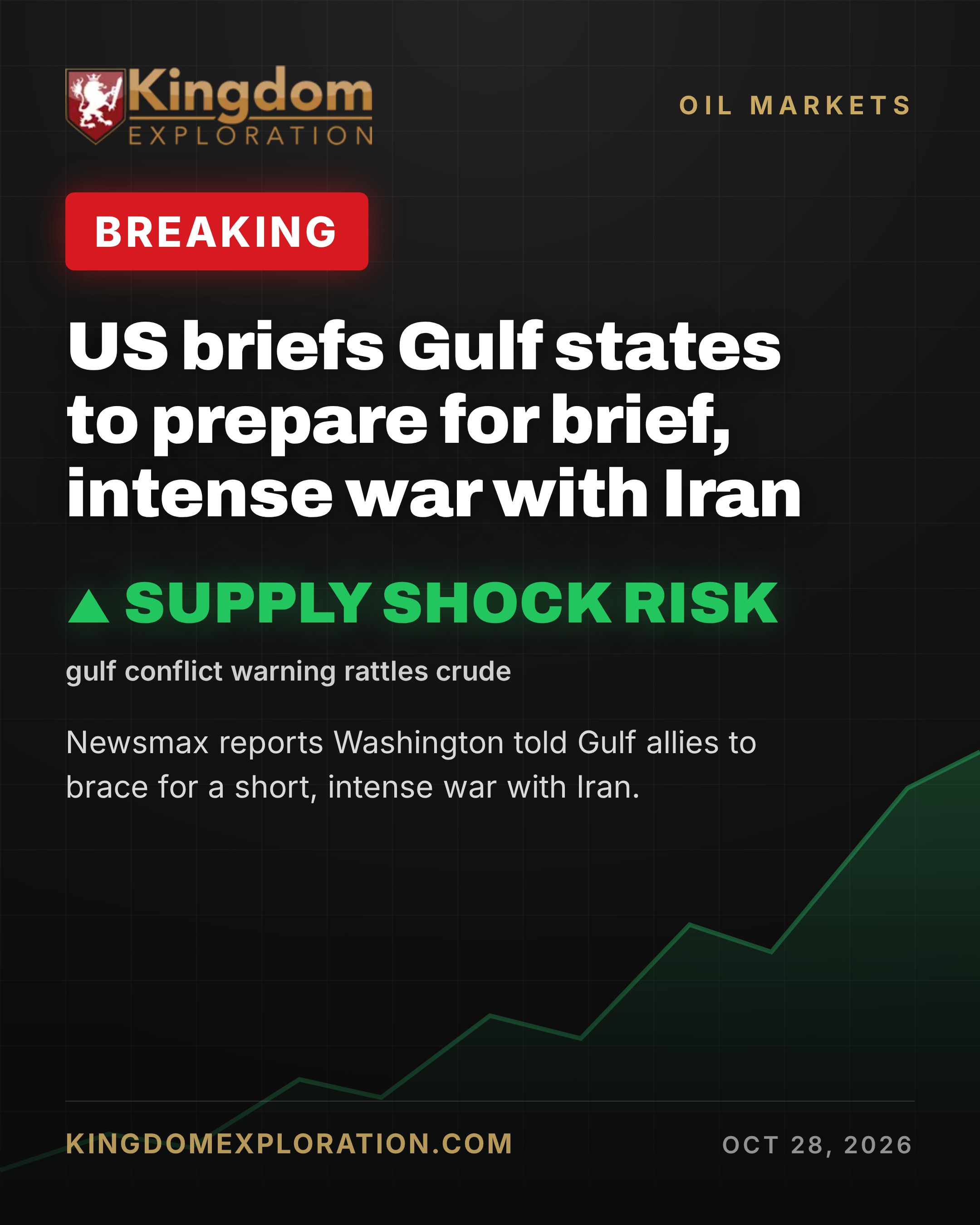
The United States has briefed Gulf Arab states to prepare for a brief but intense military conflict with Iran, Newsmax reported, a warning that puts the world's most important oil-producing region on alert for potential disruption. The report, published within the past hour, signals an escalation in regional tensions centered on the Persian Gulf and the waters through which a large share of global crude flows.
Related coverage: US Orders ALL Staff Out of Saudi Arabia
What Just Happened
According to Newsmax, Washington has quietly notified Gulf states to be ready for the possibility of a short, high-intensity war with Iran. The briefing frames any conflict as fast-moving and concentrated rather than a prolonged campaign. The report follows earlier moves to draw down American personnel in the region, underscoring that US officials view the current standoff as entering a more dangerous phase.
For oil markets, the location is everything. The Gulf states briefed are among the largest crude exporters on the planet, and their output ships through a narrow, geographically constrained corridor. Any warning to "prepare" for conflict immediately raises questions about the security of that supply chain.
The Numbers
The Newsmax report does not attach specific figures to the briefing. No casualty estimates, troop movements, barrel-per-day disruption numbers, or price moves were cited in the source. What is concrete is the timing - the report surfaced roughly half an hour before publication - and the character of the warning: a conflict described as brief and intense.
Markets will fill in the blanks quickly. Without hard figures from the source, the key variables traders will price are the share of global crude that transits the Gulf and the spare capacity available to offset any interruption.
Why Oil Prices Could Rise
The mechanism is straightforward. The Persian Gulf and its chokepoints carry a very large portion of seaborne crude and refined products to global buyers. When the United States tells its partners to brace for war in that exact region, the perceived risk of a supply interruption climbs - and crude prices tend to build in a risk premium before a single barrel is actually lost.
- Supply at risk: Gulf exporters sit directly in the potential conflict zone, so even the threat of disruption pressures the physical market.
- Chokepoint exposure: Tankers moving Gulf crude pass through narrow waters where shipping can be delayed, rerouted, or halted.
- Thin buffer: If large volumes were pulled offline suddenly, the world's cushion of spare production capacity would be tested, amplifying any price move.
- Insurance and freight: War-risk insurance and shipping costs typically spike on escalation warnings, raising the delivered cost of crude.
Kingdom Exploration's read: a government-to-government warning to "prepare for war" is exactly the kind of headline that moves the risk premium before fundamentals change. Traders rarely wait for confirmation of actual supply loss when the region in question underwrites global oil flows.
What to Watch Next
Several signals will tell the market how seriously to take this warning. Watch for official confirmation or denial from Washington and Gulf capitals, any further drawdown of US personnel, naval and air deployments to the region, and statements from Iran. On the commodity side, monitor the front-month crude contract, war-risk insurance premiums for Gulf shipping, and any changes to tanker traffic through the region's chokepoints.
Should rhetoric harden into mobilization, the supply question moves from theoretical to immediate. For now, the market is weighing a warning - not a confirmed disruption - and that distinction will shape how much premium gets priced in.
Reporting sourced from Newsmax. Developing story.
About Kingdom Exploration
Kingdom Exploration LLC is an Oklahoma-based oil and gas exploration company. Learn more at kingdomexploration.com.