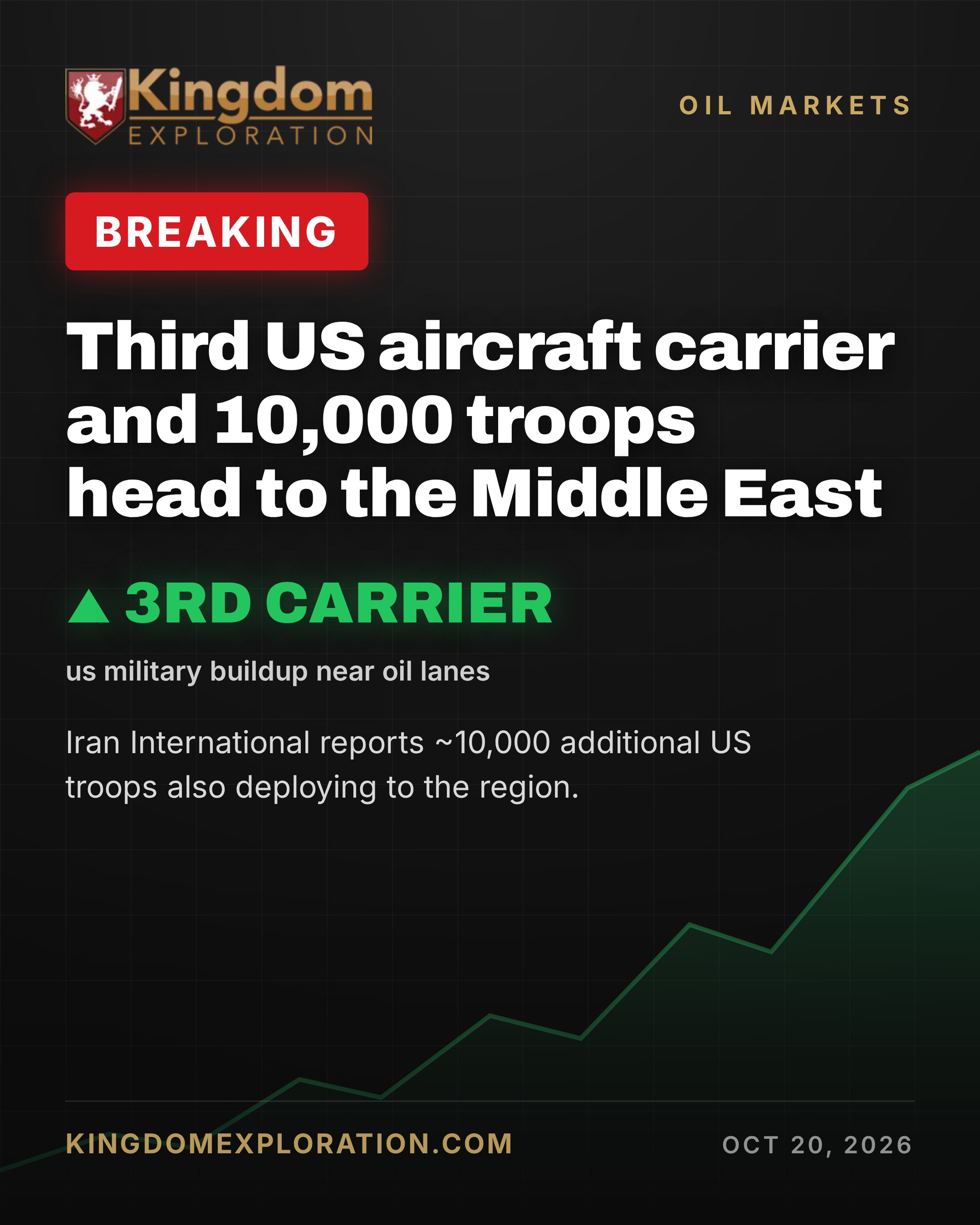
A third US aircraft carrier and roughly 10,000 additional troops are being deployed to the Middle East, Iran International reported, marking a sharp escalation of American military presence in a region that carries a large share of the world's crude oil exports. The move, reported about 81 minutes ago, pushes US firepower in the Gulf region to a level rarely seen outside of active conflict.
Related coverage: Pentagon Orders CENTCOM to PREPARE for Iran Combat
What Just Happened
According to Iran International, the United States is sending a third aircraft carrier along with about 10,000 troops toward the Middle East. Carrier strike groups are among the most significant assets the US military can move into a theater, and stacking a third one into the region signals Washington is preparing for a wide range of contingencies.
The deployment follows earlier reporting that the Pentagon had ordered US Central Command (CENTCOM) to prepare for possible combat operations involving Iran. The arrival of a third carrier and a large troop contingent is a concrete, physical step that raises the stakes considerably.
The Numbers
- A third US aircraft carrier being deployed to the Middle East
- Approximately 10,000 additional troops en route
- Report published roughly 81 minutes ago by Iran International
No oil-price figures were provided in the source. The market impact here is driven by the escalation in military posture and the geographic concentration of risk, not by any announced disruption to physical barrels.
Why Oil Prices Could Rise
The Middle East and the Gulf region sit at the center of global crude flows. A buildup of US naval and ground forces near those shipping lanes raises the probability of a confrontation that could threaten tanker traffic, export terminals, and the critical chokepoints through which a significant portion of seaborne oil moves every day.
Markets price this kind of military escalation as a risk premium: traders bid crude higher not because supply has already been lost, but because the odds of a sudden disruption have climbed. When carrier groups converge and tens of thousands of troops mobilize, the tail risk of a supply shock grows, and that uncertainty tends to show up quickly in futures.
Kingdom Exploration's read: a third carrier is not a drill posture. It is the kind of hardware commitment that forces the oil market to take the possibility of a regional conflict seriously, and a thinner global spare-capacity cushion means any actual interruption would be felt fast.
What to Watch Next
- Confirmation and details of the carrier and troop movements from US defense officials
- Any Iranian response, including statements or naval activity near key shipping lanes
- Insurance and shipping rates for tankers transiting the region
- Whether any physical export or transit disruption actually materializes
Reporting sourced from Iran International. Developing story.
About Kingdom Exploration
Kingdom Exploration LLC is an Oklahoma-based oil and gas exploration company. Learn more at kingdomexploration.com.

