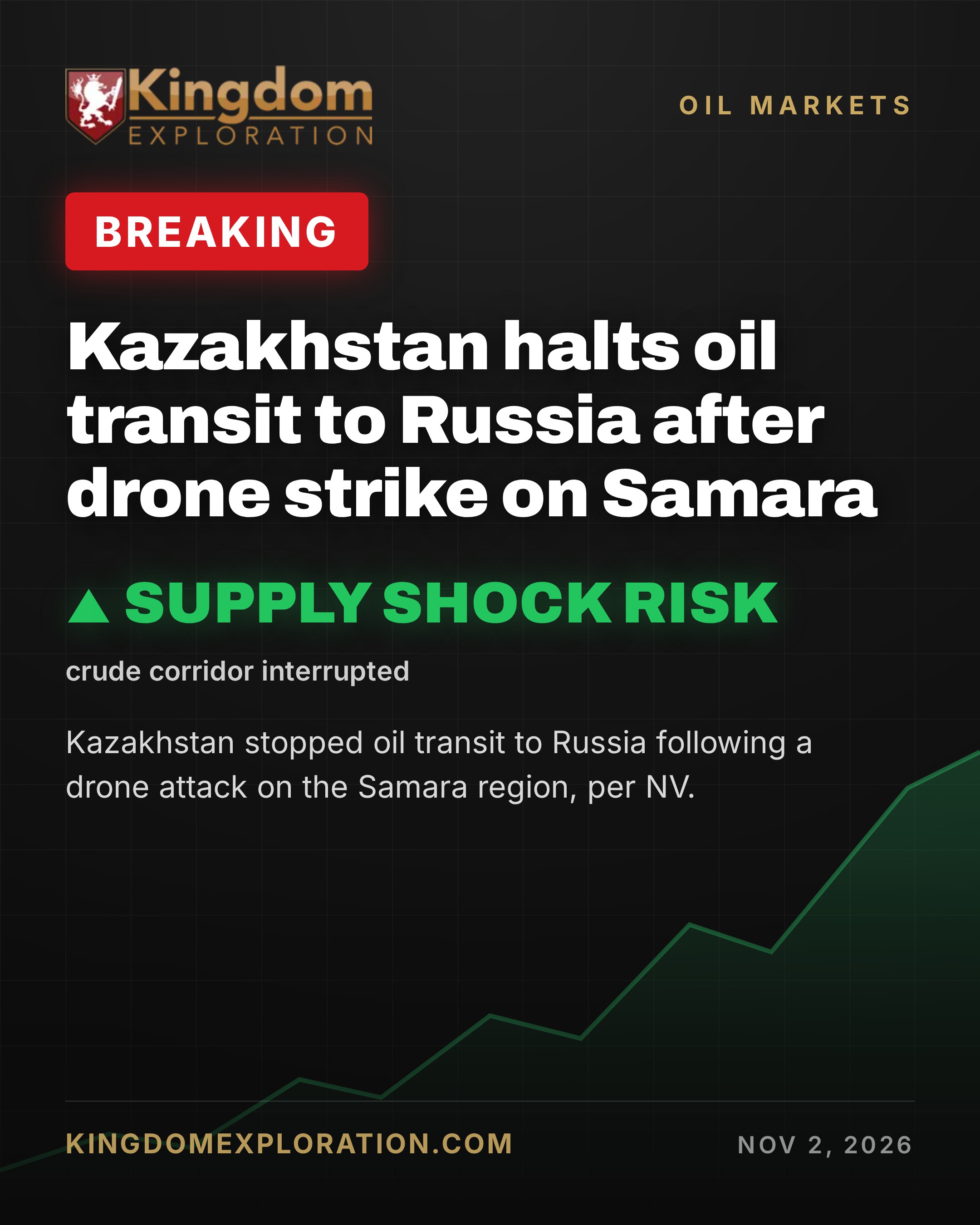
Kazakhstan has halted oil transit to Russia following a drone attack on the Samara region, The New Voice of Ukraine reported, in a fresh disruption to one of the key arteries moving crude across the region. The stoppage, reported roughly 20 minutes ago, deepens a run of supply interruptions tied to strikes on Russian oil infrastructure.
Related coverage: Drone Strikes SHUT Kazakh Export Terminal, Output Dives
What Just Happened
According to The New Voice of Ukraine, Kazakhstan stopped oil transit to Russia after a drone attack hit the Samara region. Samara is a major Russian oil hub, home to refineries and pipeline infrastructure that link Kazakh and Russian crude flows toward export markets. With the transit route interrupted, barrels that would normally move through the corridor are now at risk of sitting idle.
This is a new escalation in an ongoing wave of disruptions to crude logistics in the region. Earlier reporting covered strikes that forced a Kazakh export terminal offline and pushed output lower; the latest halt widens the footprint of the problem from export terminals to cross-border transit itself.
The Numbers
The source report does not specify the volume of oil affected, the duration of the halt, or a price move tied to this specific development. What is confirmed is the action itself: Kazakhstan has stopped oil transit to Russia, and the trigger was a drone attack on Samara. We are not attaching figures that the source did not provide.
Why Oil Prices Could Rise
Transit halts remove barrels from the flow to market, even if only temporarily, and that tightens available supply. When crude cannot move through a key corridor, traders price in the risk that the disruption lasts longer or spreads to additional routes. Attacks on Russian oil infrastructure also add a geopolitical risk premium: the more frequently refineries, terminals, and pipelines come under threat, the more the market builds in the possibility of sustained outages.
- Supply at risk: halted transit means volumes that normally reach market may be stranded.
- Risk premium: repeated strikes on Russian oil assets raise the perceived odds of larger, longer disruptions.
- Spare capacity question: the market watches whether other producers can backfill any barrels that stay offline.
Kingdom Exploration's read: back-to-back disruptions - an export terminal forced down, now a transit halt - signal that the corridor's reliability is deteriorating, and that is the kind of pattern that keeps a floor under crude prices until flows normalize.
What to Watch Next
Key questions now: how long the transit halt lasts, whether Kazakhstan or Russia confirms volumes affected, and whether additional strikes follow. Watch for official statements from pipeline operators and any signs that rerouting or repairs are underway. Also watch whether this feeds into broader crude benchmarks, since the market tends to react to the cumulative threat picture rather than any single stoppage.
Reporting sourced from The New Voice of Ukraine. Developing story.
About Kingdom Exploration
Kingdom Exploration LLC is an Oklahoma-based oil and gas exploration company. Learn more at kingdomexploration.com.