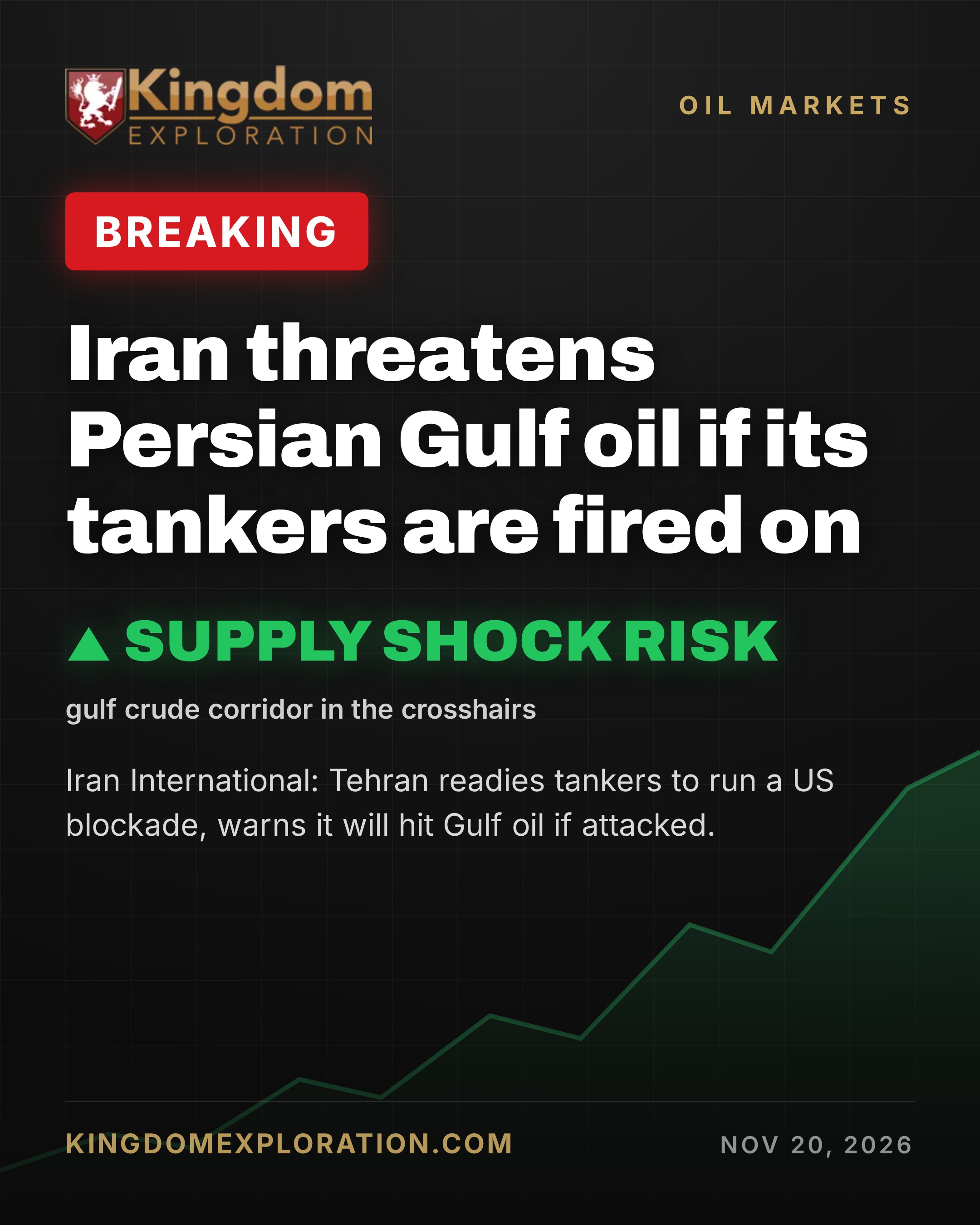
Iran is preparing tankers to run a US naval blockade and is warning that it will target Persian Gulf oil if its vessels are fired upon, Iran International reported, citing an escalation that puts one of the world's busiest crude corridors directly in the crosshairs.
Related coverage: US Fires on Ship Running HORMUZ Blockade
What Just Happened
According to Iran International, Tehran is readying tankers to push through a US blockade and has paired that move with an explicit threat: if its ships come under fire, Iran will strike at Persian Gulf oil. The warning sharpens an already tense standoff in the Gulf, where earlier reporting documented US forces firing on a vessel attempting to run the Hormuz blockade.
The new element is Iran's open threat to retaliate against regional oil infrastructure and shipping rather than simply its own cargoes. That shifts the risk from a single vessel incident toward the broader flow of crude through the Gulf.
The Numbers
Iran International's report centers on the threat itself; specific tanker counts, barrel figures, or price moves were not detailed in the source. What is established is the geography: the Persian Gulf and the Strait of Hormuz, through which a large share of seaborne crude and condensate transits daily, are the stage for this confrontation.
Without hard figures in the source, the market's attention falls on the corridor's strategic weight rather than a single published statistic.
Why Oil Prices Could Rise
Any threat to Persian Gulf oil strikes at the heart of global supply. The mechanism is straightforward:
- Supply at risk: A direct threat to Gulf oil and shipping raises the odds of disrupted exports from one of the planet's densest crude-export zones.
- Risk premium: Traders price in the possibility of escalation well before any barrels are actually lost, pushing crude higher on headline risk alone.
- Spare capacity: If Gulf flows are interrupted, the world leans on limited spare production capacity elsewhere, leaving little cushion and amplifying price spikes.
- Insurance and freight: Confrontation in the Gulf tends to lift tanker insurance and shipping costs, which feed through to delivered crude prices.
Kingdom Exploration's read: the market reacts to the threat long before the first shot. A credible warning against Persian Gulf oil, layered on top of an active blockade confrontation, is exactly the kind of catalyst that pulls a risk premium into crude pricing.
What to Watch Next
- Whether US forces engage any Iranian tanker attempting to run the blockade.
- Any move by Iran against Gulf shipping lanes or oil infrastructure following such an engagement.
- Tanker traffic and rerouting around the Strait of Hormuz.
- Changes in war-risk insurance premiums for Gulf shipping.
- Official statements from Washington and Tehran that confirm or de-escalate the standoff.
Reporting sourced from Iran International. Developing story.
About Kingdom Exploration
Kingdom Exploration LLC is an Oklahoma-based oil and gas exploration company. Learn more at kingdomexploration.com.

