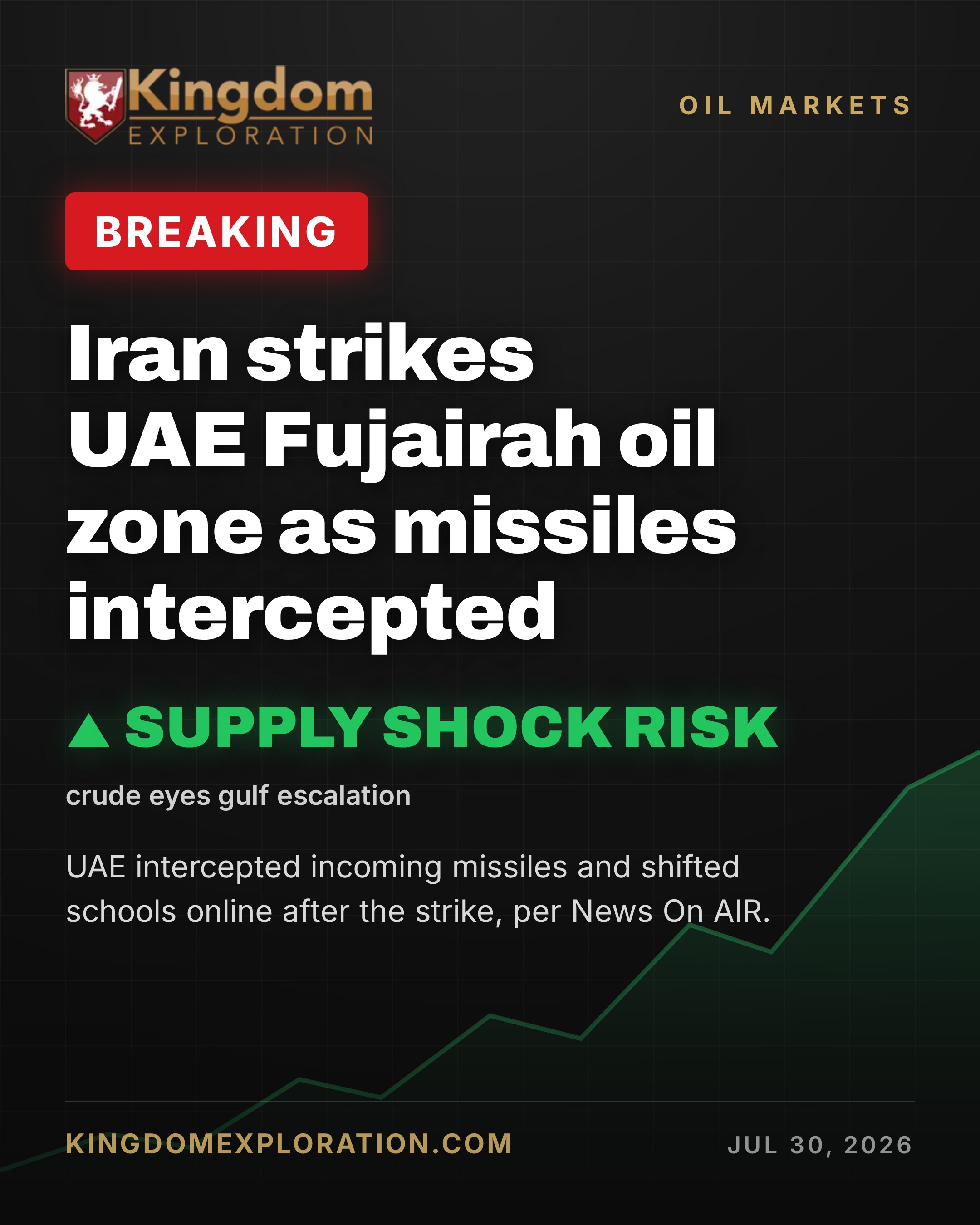
Iran struck the Fujairah oil zone in the United Arab Emirates as UAE forces intercepted incoming missiles and authorities shifted schools to online learning, News On AIR reported. The strike targets one of the most strategically important energy hubs on the planet, immediately raising the stakes for global crude supply.
What Just Happened
According to News On AIR, Iran launched an attack on the Fujairah oil zone, prompting the UAE to activate air defenses to intercept the incoming missiles. In parallel, UAE authorities moved schools to online instruction, a signal that officials are treating the situation as an active security threat rather than an isolated incident.
Fujairah sits on the eastern seaboard of the UAE, just outside the Strait of Hormuz. It is a critical oil storage, bunkering, and export hub, giving Gulf producers a route to ship crude and refined products without passing through the narrow chokepoint. A direct strike on this zone marks a serious escalation in regional tensions.
The Numbers
At the time of publication, the report from News On AIR did not include specific casualty figures, volumes of oil affected, or price movements. What is confirmed is the target - the Fujairah oil zone - and the defensive response: missile interceptions by the UAE and a shift of schools to online learning. Kingdom Exploration is monitoring for verified figures on any disruption to storage or export capacity as they emerge.
Why Oil Prices Could Rise
Attacks on energy infrastructure in the Gulf tend to inject an immediate risk premium into crude prices, and Fujairah is no ordinary target.
- Strategic location: Fujairah is a major storage and bunkering hub that allows oil to bypass the Strait of Hormuz. Threats to it undermine the very workaround that markets rely on to reduce chokepoint risk.
- Supply at risk: Damage to storage or export facilities could interrupt the flow of crude and refined products into global markets, tightening available supply.
- Risk premium: Even without confirmed physical damage, direct military strikes on Gulf oil infrastructure typically push traders to price in the possibility of wider disruption.
- Escalation potential: Missile exchanges between Iran and the UAE raise the odds of a broader regional conflict that could draw in other producers and shipping lanes.
Kingdom Exploration's read: markets hate uncertainty around Gulf supply lines, and an attack on Fujairah strikes at one of the region's key safety valves. Until the scale of any disruption is confirmed, traders are likely to lean toward pricing in the risk rather than dismissing it.
What to Watch Next
Several questions will drive the market response in the hours and days ahead:
- Confirmation of any physical damage to Fujairah's storage, refining, or export capacity.
- Whether crude flows and bunkering operations continue uninterrupted.
- Any UAE, Iranian, or international official statements on retaliation or de-escalation.
- Impact on shipping and insurance costs for tankers operating near the Strait of Hormuz.
- Whether the conflict widens to involve additional Gulf energy infrastructure.
Reporting sourced from News On AIR. Developing story.
About Kingdom Exploration
Kingdom Exploration LLC is an Oklahoma-based oil and gas exploration company. Learn more at kingdomexploration.com.

