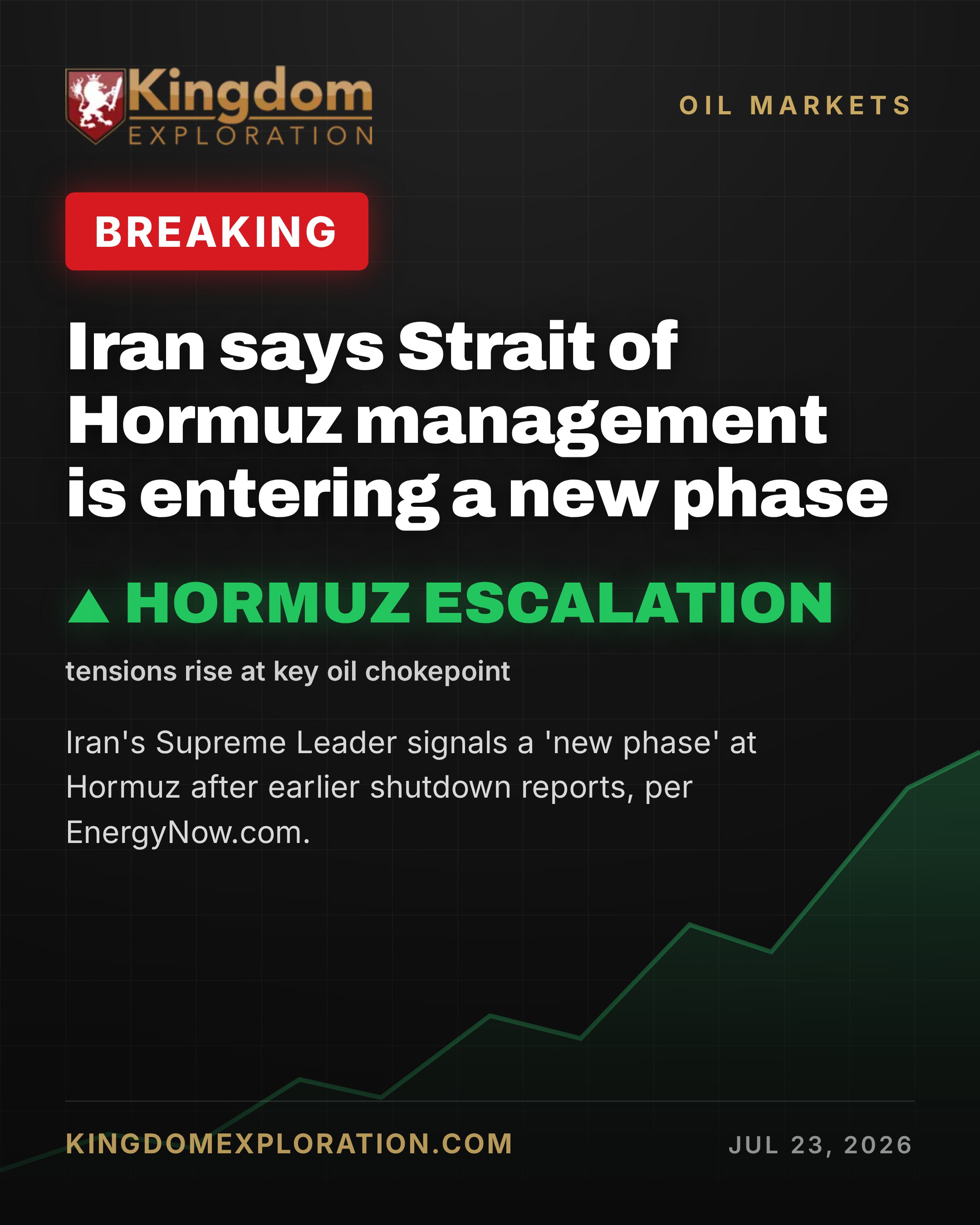
Iran's Supreme Leader has said that the management of the Strait of Hormuz will enter a "new phase," according to EnergyNow.com, in remarks reported roughly two hours ago that mark a fresh escalation in the standoff over the world's most critical oil chokepoint. The statement builds on our earlier coverage of Iran moving to shut the strait amid rising tensions with the United States.
Related coverage: Iran Shuts Down Strait of Hormuz Amid US Tensions
What Just Happened
Per EnergyNow.com, Iran's Supreme Leader stated that management of the Strait of Hormuz will move into a "new phase." The remark signals a further hardening of Tehran's posture over the waterway that separates the Persian Gulf from the Gulf of Oman, coming after earlier reports that Iran had moved to shut the strait amid its confrontation with Washington.
The phrasing itself is deliberately open-ended. A "new phase" of management could point to tighter Iranian control over transit, expanded inspections, or a broader shift in how Tehran polices the chokepoint. The specific measures behind the language were not detailed in the reporting available.
The Numbers
The source reporting from EnergyNow.com did not include specific figures such as barrels-per-day disruption, price moves, or timelines. What is not in dispute is the strait's outsized role in global energy flows: the Strait of Hormuz is the single busiest transit point for seaborne crude and refined products, and any change to its operation is watched closely by every major oil market participant.
Kingdom Exploration is not attaching a price figure to this development because none was provided in the source material. As concrete numbers emerge, we will update this developing story.
Why Oil Prices Could Rise
The Strait of Hormuz is the mechanism that turns Middle East tension into a global price event. A large share of the world's crude exports must pass through the narrow waterway, and there is no comparable alternate route for much of that volume. When Tehran signals a "new phase" of management, traders immediately price in the risk that transit could be slowed, restricted, or interrupted.
That risk premium can build even before any physical barrel is halted. Markets tend to move on the probability of disruption, not just the event itself. Key mechanisms to consider:
- Supply at risk: Volumes moving through Hormuz have limited rerouting options, so even the threat of restriction concentrates supply anxiety.
- Risk premium: Escalatory language raises the insurance and freight costs of moving crude, feeding into the price barrels change hands at.
- Spare capacity: The market's cushion to absorb a Hormuz interruption is finite, which is why chokepoint headlines carry outsized weight.
Kingdom Exploration's read: language matters at chokepoints. A "new phase" is intentionally vague, and vagueness at the world's most important oil passage is exactly the kind of ambiguity that keeps a risk premium in the market until the picture clears.
What to Watch Next
The immediate questions are whether Tehran defines what the "new phase" concretely involves, and whether shipping traffic through the strait shows any measurable change in the days ahead. Watch for statements from the United States and Gulf states, any advisories to commercial vessels and tanker operators, and confirmed data on transit volumes.
For oil markets, the tell will be whether this remains a war of words or translates into physical measures at the waterway. Kingdom Exploration will track further reporting and update the numbers as verified figures become available.
Reporting sourced from EnergyNow.com. Developing story.
About Kingdom Exploration
Kingdom Exploration LLC is an Oklahoma-based oil and gas exploration company. Learn more at kingdomexploration.com.