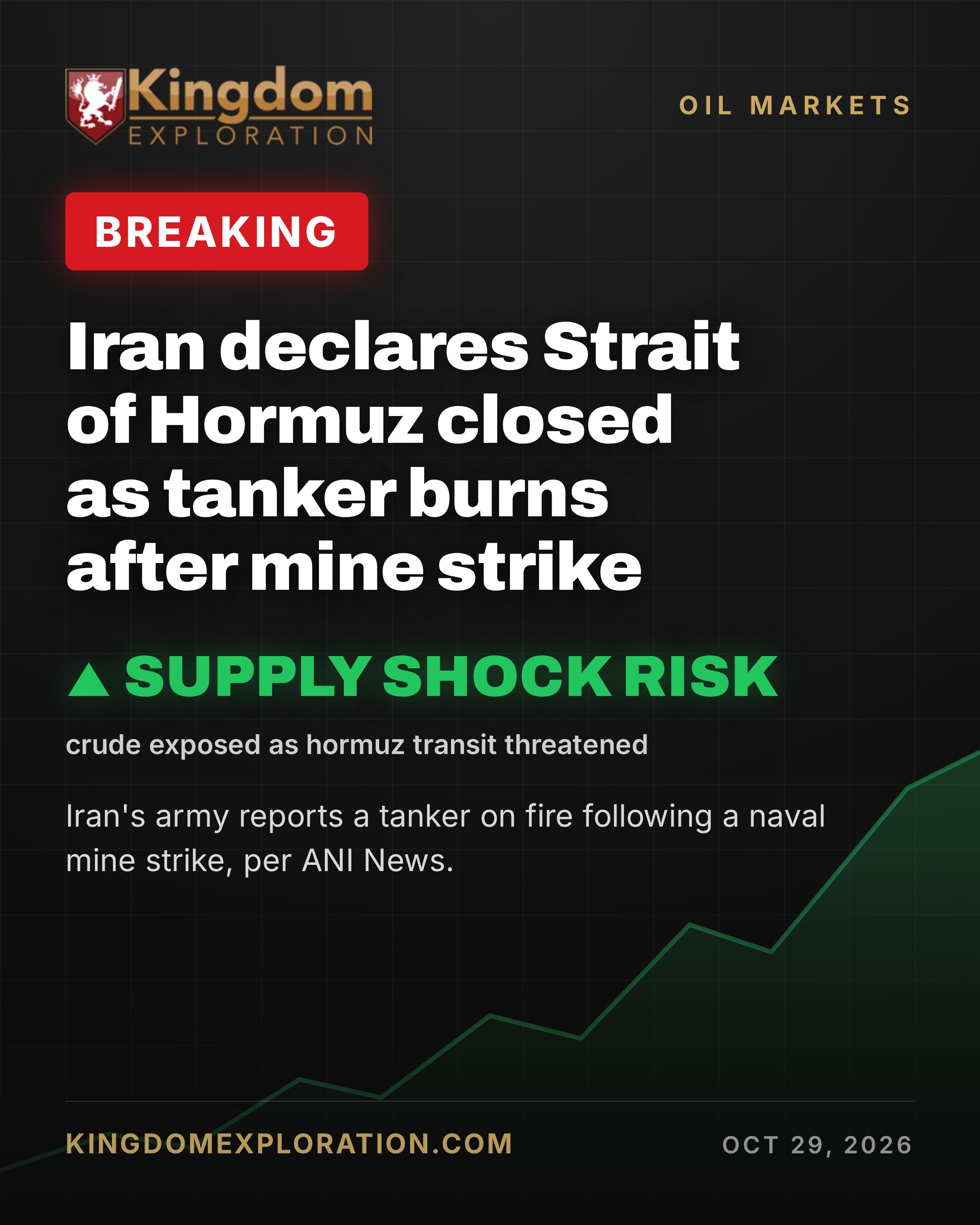
Iran has declared the Strait of Hormuz closed after its army reported a tanker on fire in the wake of a naval mine strike, ANI News reported, in a dramatic escalation over the world's most critical oil chokepoint. The declaration, issued within the hour, threatens the single waterway through which a large share of seaborne crude moves to global markets.
Related coverage: Iran Vows to Assert Control Over STRAIT of Hormuz
What Just Happened
According to ANI News, Iran has formally declared the Strait of Hormuz closed. The announcement came alongside a report from Iran's army of a tanker on fire following a naval mine strike. That sequence - a vessel reportedly ablaze and a mine incident in the narrow passage - marks a sharp move from rhetoric about asserting control to a concrete disruption of shipping.
The Strait of Hormuz is the maritime gateway between the Persian Gulf and the open ocean. Any closure, blockage, or threat to vessels passing through it immediately puts a large volume of crude and refined product exports at risk, because tankers loading from Gulf producers have no practical alternate route of comparable scale.
The Numbers
The ANI News report at this stage carries no verified figures on barrels affected, the vessel involved, or casualties. What is stated is clear and material: Iran declaring the strait closed, and its army reporting a tanker fire tied to a naval mine strike. As additional details emerge, specific volumes, the identity of the tanker, and the status of other shipping in the area will define the scale of the disruption.
Why Oil Prices Could Rise
The Strait of Hormuz is the reason traders treat the Persian Gulf as the most sensitive supply region on earth. When transit through it is called into question, three forces push on crude prices at once:
- Physical supply at risk. A declared closure and a burning tanker signal that cargoes may be delayed, diverted, or halted, tightening available barrels.
- Risk premium. Even before a single barrel is confirmed lost, insurers, shippers, and traders price in the danger of transiting a mined, contested waterway.
- Limited workarounds. Pipeline bypass capacity around Hormuz is finite, so spare capacity elsewhere cannot easily offset a serious interruption to Gulf flows.
Kingdom Exploration's read: a formal closure declaration paired with an actual vessel fire is exactly the combination that moves oil markets fastest - it converts a standing threat into an active, physical event, and markets tend to price the worst case first and verify later.
What to Watch Next
- Confirmation of whether tanker traffic through Hormuz is actually halted or merely slowed.
- The identity and flag of the tanker reported on fire, and any confirmation of the mine strike.
- Responses from Gulf producers, major navies, and shipping and insurance markets.
- Independent verification of Iran's closure declaration and any counter-statements.
This is a fast-moving situation. The core facts as reported are that Iran has declared the strait closed and its army has reported a tanker fire following a naval mine strike. Volumes, verification, and the duration of any disruption remain to be established.
Reporting sourced from ANI News. Developing story.
About Kingdom Exploration
Kingdom Exploration LLC is an Oklahoma-based oil and gas exploration company. Learn more at kingdomexploration.com.

