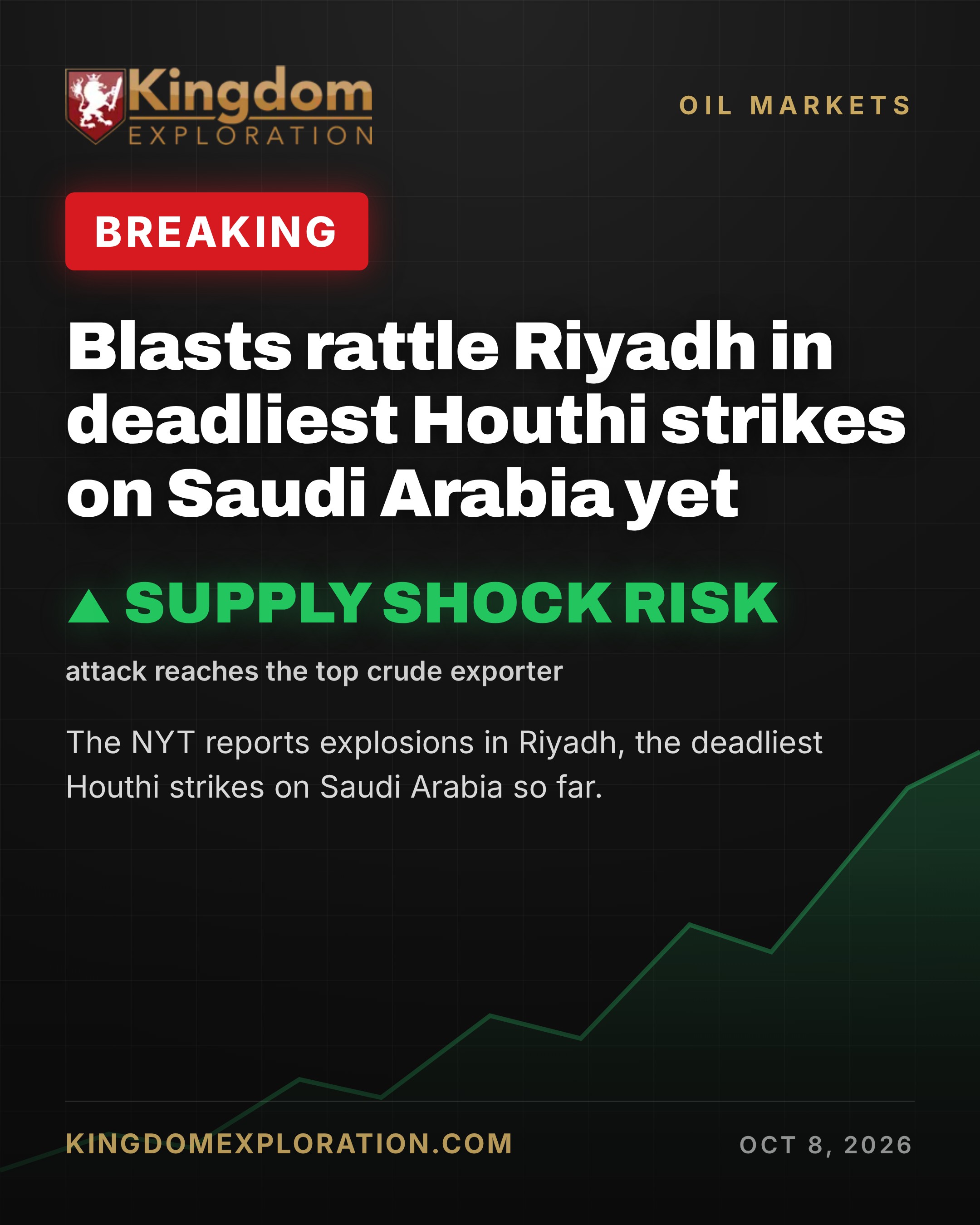
Explosions shook the Saudi capital of Riyadh as Saudi Arabia was struck by what The New York Times describes as the deadliest Houthi attacks on the kingdom to date, according to a report published roughly an hour ago.
What Just Happened
Blasts rattled Riyadh as the Houthis launched strikes that the NYT characterizes as the most lethal the kingdom has endured so far in the group's long-running campaign. Saudi Arabia is the world's largest crude oil exporter, and any attack reaching its capital immediately raises questions about the security of its energy infrastructure and the broader stability of the Gulf.
At this stage, the report centers on the fact of the explosions in Riyadh and the characterization of the assault as unusually deadly. Details on specific targets, casualty figures, and damage were not provided in the available source material.
The Numbers
The New York Times did not publish specific casualty counts, barrel-per-day figures, or price movements in the summary available at the time of writing. What is established: the attacks are described as the deadliest Houthi strikes on Saudi Arabia so far, and blasts were felt in Riyadh itself. We will not attach figures the reporting does not support.
Context matters here: Saudi Arabia is a cornerstone of global crude supply, and strikes that reach the capital signal an escalation beyond the kingdom's southern border regions.
Why Oil Prices Could Rise
Attacks on Saudi Arabia carry outsized weight for oil markets because the kingdom sits at the heart of global supply and holds much of the world's spare production capacity. When that infrastructure appears vulnerable, traders typically price in a risk premium even before any physical barrels are lost.
- Supply at risk: Strikes reaching Riyadh raise the perceived threat to Saudi energy facilities, pipelines, and export terminals.
- Risk premium: Markets tend to add a premium when the security of the top exporter is in question, regardless of whether output is immediately disrupted.
- Spare capacity concern: Saudi Arabia is the main holder of global spare capacity; threats to that buffer can amplify price sensitivity to any further escalation.
Kingdom Exploration's read: markets often move on the perception of threat to Saudi supply as much as on confirmed damage. An escalation that reaches the capital is precisely the kind of headline that pushes crude's risk premium higher until the scope of the damage becomes clear.
What to Watch Next
Watch for official Saudi confirmation of targets and any impact on oil facilities or export operations. Key signals include statements from Saudi authorities, any reported disruption to production or shipping, and the market's opening reaction in Brent and WTI. Further strikes or a Saudi response would sharpen the supply-risk picture.
Reporting sourced from The New York Times. Developing story.
About Kingdom Exploration
Kingdom Exploration LLC is an Oklahoma-based oil and gas exploration company. Learn more at kingdomexploration.com.