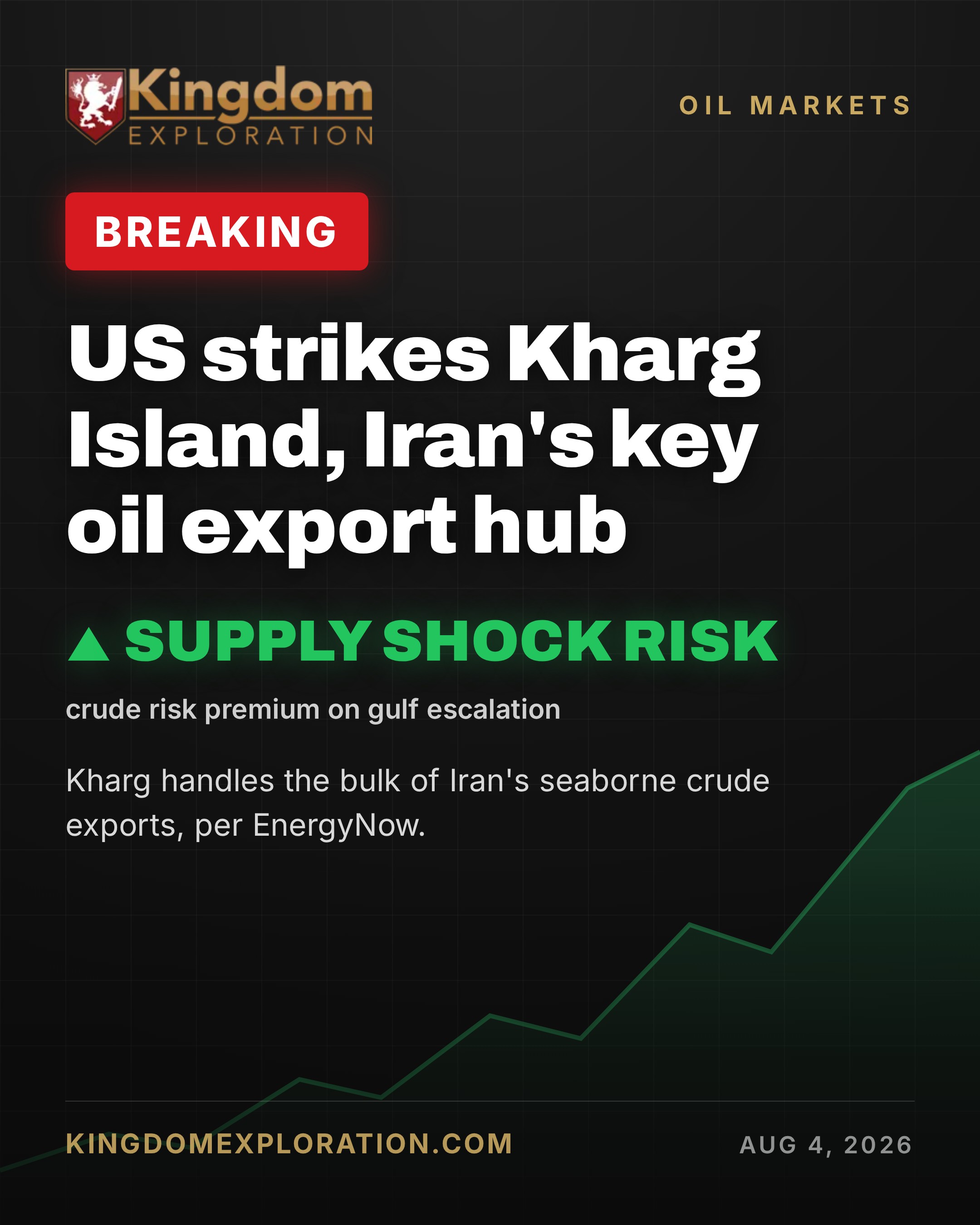
Kharg Island, described as Iran's "crown jewel" and the key hub for the country's oil exports, has been struck by the United States, EnergyNow reported. The terminal handles the overwhelming majority of Iranian crude shipments, making any disruption there a direct threat to global supply flows.
What Just Happened
According to EnergyNow, Kharg Island — the primary loading point for Iran's seaborne crude exports — was hit in a US strike. The island sits in the northern Persian Gulf and functions as the chokepoint through which nearly all of Iran's export barrels move to tankers.
Because Kharg concentrates so much of Iran's export capability in one location, a strike on the facility carries outsized implications relative to its physical footprint. EnergyNow's framing of the terminal as the "crown jewel" underscores how central the site is to Tehran's oil revenue and to the flow of Iranian barrels into the market.
The Numbers
The available reporting from EnergyNow centers on the strategic significance of the site rather than specific figures. What the outlet emphasizes is qualitative but material: Kharg Island is the key hub for Iran's oil exports, meaning the terminal accounts for the bulk of the crude Iran ships abroad.
No verified figures on damage, volumes taken offline, or price moves were provided in the initial report. As a developing story, concrete export-loss numbers and market reaction data will follow as details are confirmed.
Why Oil Prices Could Rise
The mechanism is straightforward. When a facility that handles a large share of a major producer's exports comes under attack, the market prices in the risk that barrels could be removed from supply — whether through physical damage, halted loadings, or the threat of wider escalation.
- Supply at risk: Kharg is the single point through which most Iranian export crude passes. Any interruption there tightens available global barrels.
- Risk premium: A US strike on Iranian oil infrastructure raises the probability of retaliation and broader conflict in the Persian Gulf, a region that carries a meaningful share of world crude traffic. Traders typically add a premium to compensate for that uncertainty.
- Spare capacity in focus: Markets will look to whether other producers can backfill any lost Iranian volumes. The thinner the effective cushion, the sharper the potential price response.
Kingdom Exploration's read: strikes on a country's principal export terminal are exactly the kind of event that compresses the market's sense of supply security. Even before any confirmed barrel is lost, the perceived fragility of Gulf export routes tends to lift crude.
What to Watch Next
- Damage assessment: Confirmation of the extent of the strike and whether loading operations at Kharg are affected.
- Iran's response: Any move by Tehran affecting shipping lanes or regional infrastructure would sharpen the supply picture.
- Export volumes: Data on whether Iranian crude shipments slow, stop, or reroute in the days ahead.
- Price action: Movement in Brent and WTI as the market digests the escalation and any confirmed supply impact.
Reporting sourced from EnergyNow. Developing story.
About Kingdom Exploration
Kingdom Exploration LLC is an Oklahoma-based oil and gas exploration company. Learn more at kingdomexploration.com.