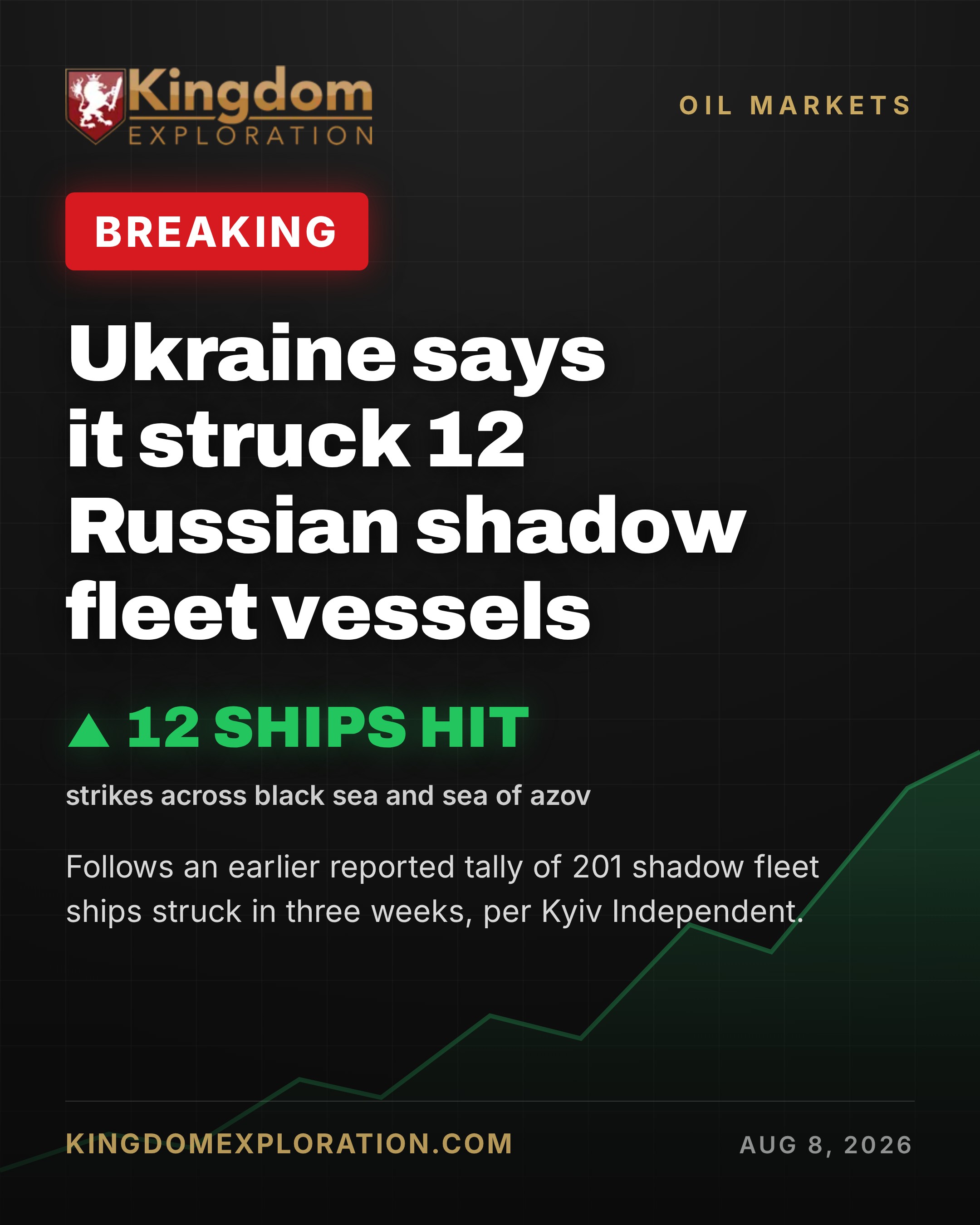
Ukraine says its forces struck 12 Russian shadow fleet vessels operating in the Black Sea and the Sea of Azov, according to The Kyiv Independent in a report published within the last hour. The claim marks a fresh escalation in Ukraine's campaign against the aging tanker network Moscow uses to move sanctioned crude to global buyers.
Related coverage: Ukraine Hits 201 Russian Shadow Fleet Ships in Three Weeks
What Just Happened
Per The Kyiv Independent, Ukraine reported striking 12 vessels tied to Russia's so-called shadow fleet across two key maritime theaters: the Black Sea and the Sea of Azov. Both waterways are central to the movement of Russian crude and refined products, and both sit at the heart of Ukraine's expanding effort to disrupt the logistics that fund Moscow's war economy.
The shadow fleet refers to the network of aging, often opaquely owned and inadequately insured tankers that Russia has leaned on to keep oil flowing to international markets despite Western sanctions and price caps. Strikes against these vessels directly target the physical chain that carries barrels from Russian ports to overseas buyers.
The Numbers
The figures available from the source are limited but pointed:
- 12 vessels struck, according to Ukraine.
- Two theaters involved: the Black Sea and the Sea of Azov.
- The report was published roughly 40 minutes before this writing.
This latest claim builds on earlier reporting that Ukraine had hit 201 shadow fleet ships over a three-week window, underscoring a sustained rather than one-off campaign. No casualty figures, tonnage losses, or barrels-affected totals were provided in the current source text.
Why Oil Prices Could Rise
Attacks on tankers introduce a supply-side risk premium in several ways. First, damaged or sunk vessels remove carrying capacity from a fleet that is already stretched by sanctions and insurance constraints. Second, a rising threat to shipping in the Black Sea and Sea of Azov can push up freight and insurance costs, raising the effective delivered price of the crude that does move.
Third, and most important for market psychology, a widening campaign against tankers signals that a meaningful slice of Russian export logistics is now under direct fire. Traders tend to price in the possibility that flows could be interrupted, disrupted, or rerouted, and that expectation alone can firm crude prices even before physical volumes change.
Kingdom Exploration's read: repeated strikes on the shadow fleet chip away at the reliability of a supply channel the market has quietly relied on to keep barrels flowing. The more that channel looks vulnerable, the more risk premium the oil market is likely to build in.
What to Watch Next
- Damage confirmation: whether independent reporting or satellite imagery verifies the scale and severity of the 12 reported strikes.
- Russian export data: any measurable dip in seaborne crude loadings from Black Sea and Azov terminals in the coming weeks.
- Insurance and freight rates: rising war-risk premiums on tankers transiting the region.
- Escalation cadence: whether this pace of strikes continues, following the earlier three-week tally.
For now, the market reaction will hinge on how durable and disruptive these strikes prove to be. A single wave of attacks may register as noise; a sustained pattern that visibly dents Russian export capacity would carry more weight for global crude balances.
Reporting sourced from The Kyiv Independent. Developing story.
About Kingdom Exploration
Kingdom Exploration LLC is an Oklahoma-based oil and gas exploration company. Learn more at kingdomexploration.com.

