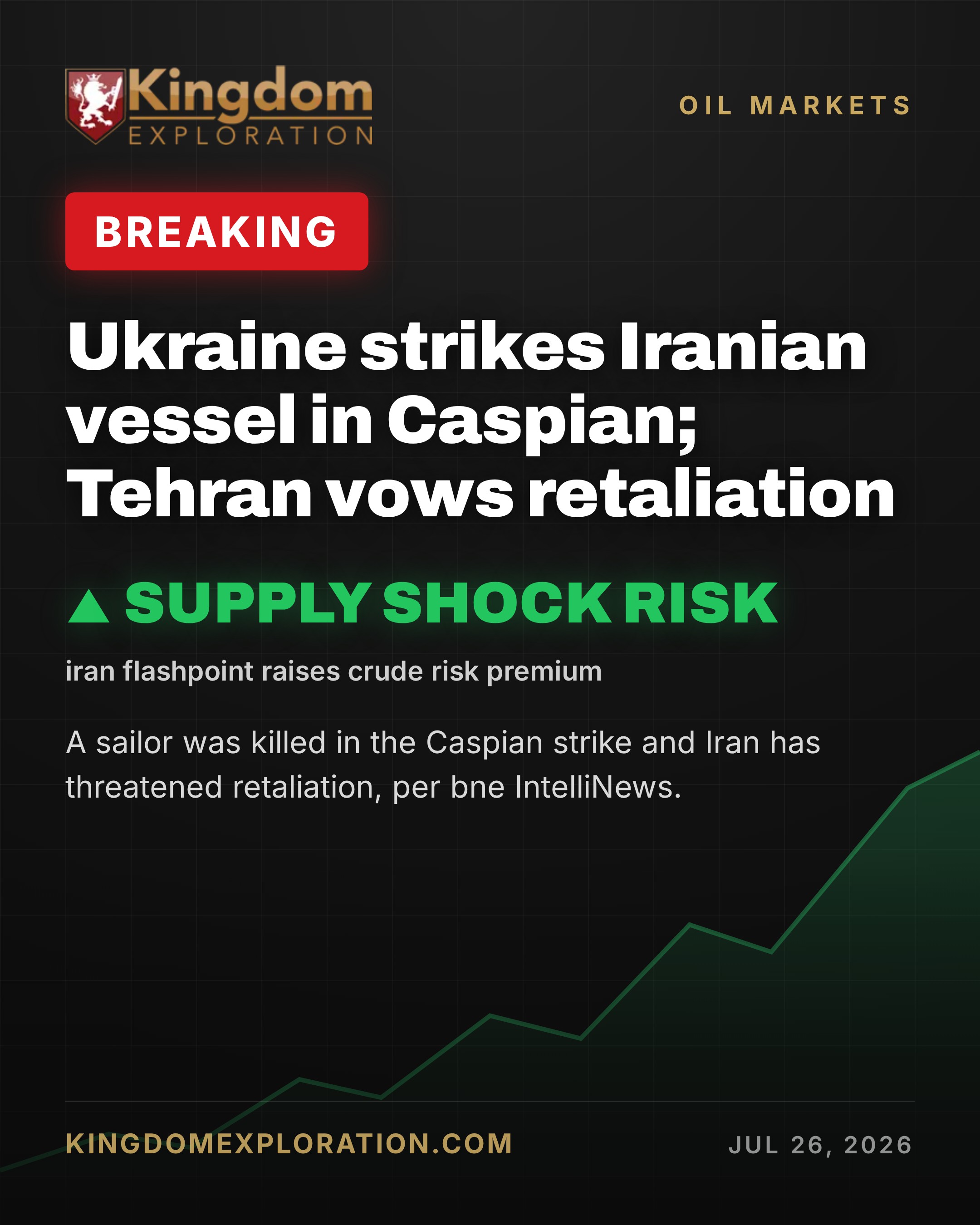
A Ukrainian strike on an Iranian vessel in the Caspian Sea has killed a sailor and prompted a retaliation threat from Tehran, per a report from bne IntelliNews on X. The development, reported roughly nine minutes ago, marks a fresh escalation involving a major crude producer and adds another layer of geopolitical risk to an already tense energy landscape.
What Just Happened
According to bne IntelliNews (@bneintellinews), Ukraine carried out a strike on an Iranian vessel in the Caspian Sea. The attack killed a sailor aboard the vessel, and Iran has responded by threatening retaliation against Ukraine.
The Caspian Sea is a strategically sensitive body of water bordered by Iran, Russia, Azerbaijan, Kazakhstan, and Turkmenistan — several of which are significant oil and gas players. A direct strike on an Iranian vessel in this theater represents an expansion of hostilities into a region not typically associated with the Ukraine conflict, and any incident touching Iran carries outsized implications for global crude markets.
The Numbers
The source reporting is limited at this early stage. The confirmed figures are:
- One sailor killed aboard the Iranian vessel.
- One vessel struck in the Caspian Sea.
- One retaliation threat issued by Tehran.
No casualty figures beyond the single reported death, no damage assessments, and no oil-flow disruption numbers have been provided in the initial report. This remains a developing story and additional details are expected to emerge.
Why Oil Prices Could Rise
Iran is a major oil producer and a central figure in Middle East energy geopolitics. Any event that raises the prospect of Iranian involvement in a wider conflict tends to inject a risk premium into crude prices, as traders price in the possibility of supply disruptions.
The mechanism is straightforward. A retaliation threat from Tehran raises the odds of an escalatory cycle. Markets watch closely for any signs that shipping lanes, export infrastructure, or production could be affected. When the perceived probability of supply being taken offline increases — even before any barrels are actually lost — oil prices can climb on the risk premium alone.
The Caspian region and its adjacent corridors move meaningful volumes of crude and refined products. An incident involving an Iranian vessel there, combined with an explicit threat of retaliation, gives traders reason to reassess how much geopolitical risk is currently priced into the market.
Kingdom Exploration's read: a strike on an Iranian vessel that kills a crew member and triggers a public retaliation threat is exactly the kind of headline that can widen the geopolitical risk premium in crude, even before any physical supply is affected. The market response will hinge on whether Tehran's threat translates into action.
What to Watch Next
- Tehran's response: Whether Iran follows through on its retaliation threat, and in what form, will set the tone for market reaction.
- Escalation risk: Any signs the confrontation could spread to shipping routes or energy infrastructure.
- Confirmation and details: Independent verification of the strike, casualty count, and the vessel's role.
- Crude price action: Whether Brent and WTI begin pricing in a wider risk premium in response.
Reporting sourced from bne IntelliNews (@bneintellinews). Developing story.
About Kingdom Exploration
Kingdom Exploration LLC is an Oklahoma-based oil and gas exploration company. Learn more at kingdomexploration.com.

