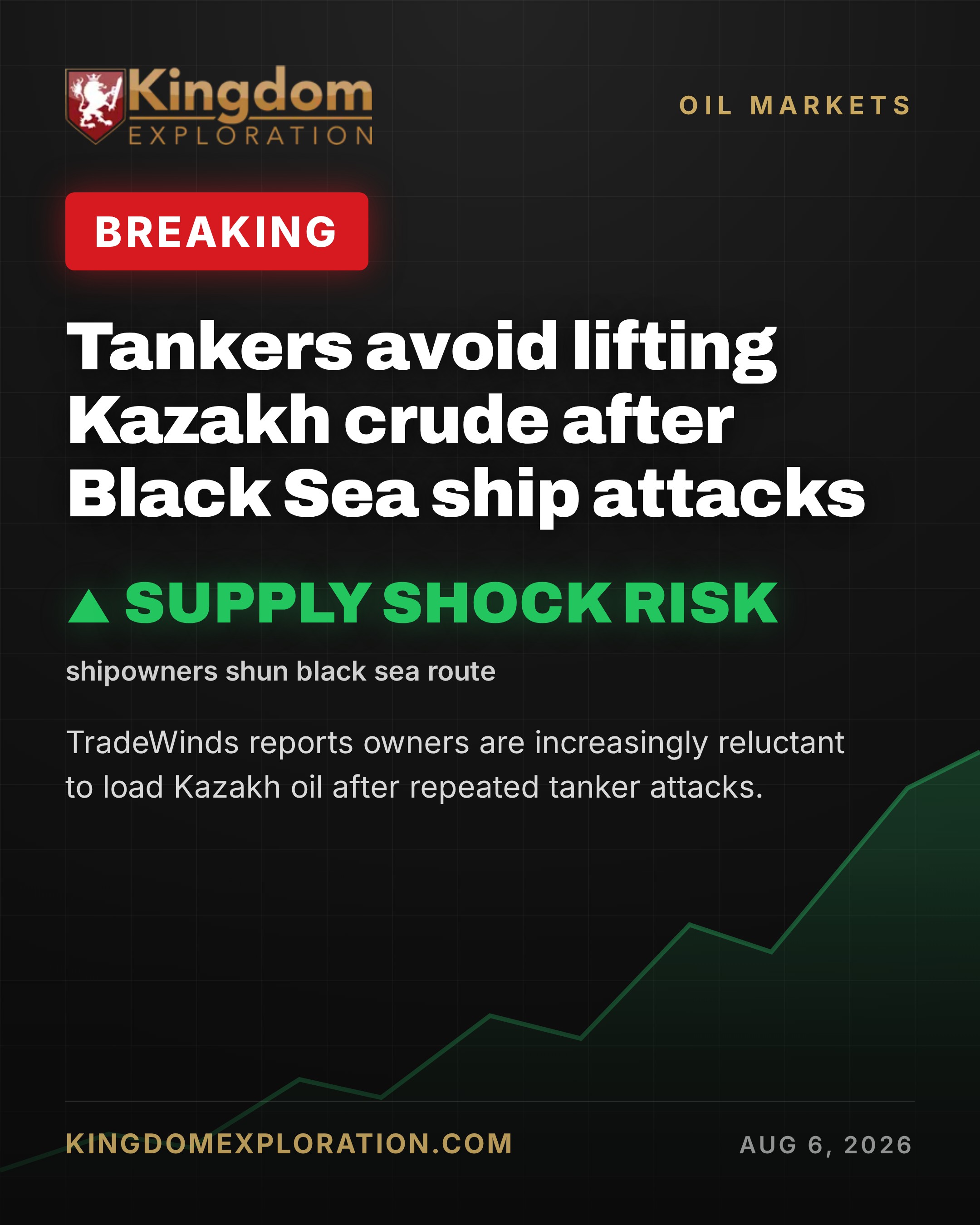
Tanker owners are increasingly reluctant to lift Kazakh crude after a series of ship attacks in the Black Sea, TradeWinds News reported, a shift that threatens to constrain one of the region's key export routes just as vessels grow wary of sailing into a hardened risk zone.
Related coverage: CPC Halts Oil Loadings Again After Two More Tankers Attacked
What Just Happened
According to TradeWinds News, shipowners are now backing away from bookings to carry Kazakh oil in the wake of repeated attacks on vessels operating in the Black Sea. The hesitation marks an escalation of the disruption already rippling through the export corridor, where loadings had been halted following strikes on tankers.
The reluctance is significant because Kazakhstan's crude reaches world markets largely through Black Sea terminals. When vessel operators judge a route too dangerous, the physical machinery of exports slows even if the pipelines and storage tanks upstream remain intact. Cargo simply cannot move without ships willing to load it.
The Numbers
TradeWinds' report centers on the behavior of the tanker market rather than a specific volume figure. No precise barrel-per-day reduction was cited in the available reporting. The core measurable signal is the shrinking pool of owners willing to accept charters for Kazakh crude out of the Black Sea — a leading indicator that export throughput could tighten in the days ahead.
As this story develops, the figures to watch will be scheduled versus completed loadings at the affected terminals and any confirmed backlog of unlifted cargoes.
Why Oil Prices Could Rise
The mechanism here is straightforward supply friction. Kazakhstan is a meaningful contributor of barrels to the seaborne market, and much of that flow depends on the Black Sea. If tanker owners continue to avoid the route, cargoes back up, spot availability tightens, and buyers must compete for alternative supply.
There is also a risk-premium dimension. Attacks on merchant shipping raise war-risk insurance costs and can push freight rates higher, both of which feed into the delivered price of crude. When a physical export chokepoint is disrupted by security threats rather than by weather or maintenance, the market tends to price in the possibility that the disruption persists or widens.
Spare capacity elsewhere can cushion the blow, but rerouting or replacing Black Sea-origin Kazakh barrels takes time and money — and that adjustment cost typically shows up in prices.
Kingdom Exploration's read: when the ships stop showing up, the barrels stop moving — even a fully operational pipeline is only as reliable as the tankers willing to load at the end of it. A reluctant fleet is a supply story in its own right.
What to Watch Next
- Whether loadings resume or the halt at Black Sea terminals extends further.
- War-risk insurance premiums and Black Sea freight rates, which signal how owners are pricing the danger.
- Any confirmed backlog of Kazakh cargoes waiting for vessels.
- Whether exporters seek alternative routes or storage as ships stay away.
- Broader crude benchmark reaction as the market gauges the duration of the disruption.
Reporting sourced from TradeWinds News. Developing story.
About Kingdom Exploration
Kingdom Exploration LLC is an Oklahoma-based oil and gas exploration company. Learn more at kingdomexploration.com.

