Live Updates
UPDATE — Aug 31, 7:13 PM CT: UKMTO says vessel hit by three projectiles while exiting Strait of Hormuz
A vessel was struck by three projectiles as it sailed out of the Strait of Hormuz, the UK Maritime Trade Operations (UKMTO) agency said, per Middle East Eye. The report specifies three separate impacts on a ship transiting one of the world's most critical oil chokepoints.
Kingdom Exploration's read: multiple projectile strikes on a single vessel raise the risk profile for tankers moving through Hormuz, through which a large share of global seaborne crude passes. Any perceived threat to safe passage can push shipping insurance and freight costs higher and support crude prices as traders factor in supply-route risk.
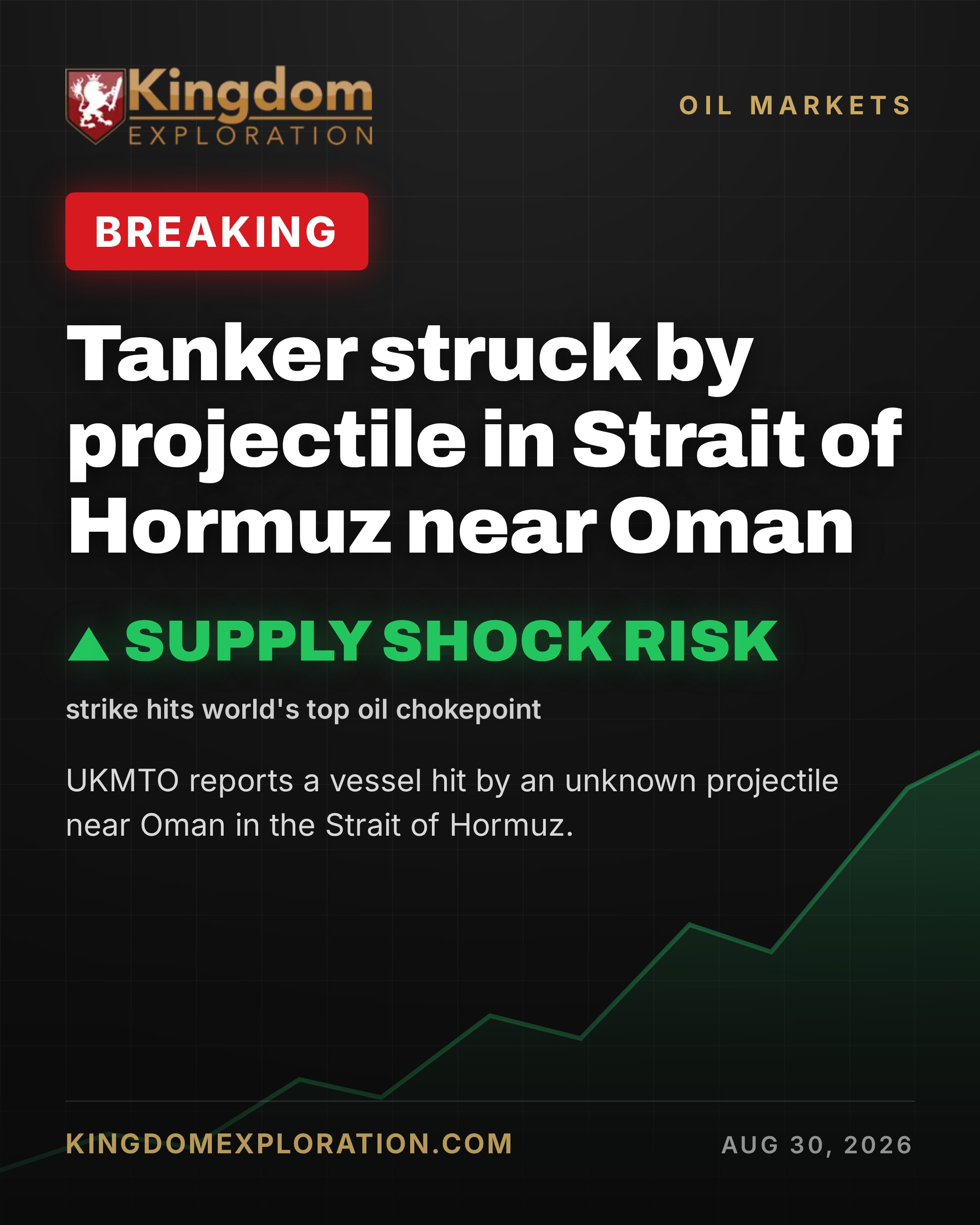
A commercial tanker was struck by an unknown projectile in the Strait of Hormuz near Oman, the UK Maritime Trade Operations (UKMTO) reported, according to The Eastern Herald. The incident, flagged within the past hour, places fresh attention on one of the most critical chokepoints in the global oil trade.
What Just Happened
Per UKMTO, a vessel transiting waters near Oman in the Strait of Hormuz was hit by a projectile of unknown origin. The maritime authority, which monitors shipping activity across the Gulf and surrounding waters, issued the alert as the situation continues to develop. Details on casualties, the extent of damage, and the identity of any party responsible have not been confirmed in the initial report.
The Strait of Hormuz is the narrow passage connecting the Persian Gulf to the Gulf of Oman and the open ocean beyond. Any threat to shipping in this corridor draws immediate scrutiny from energy markets because of the sheer volume of crude and refined products that move through it every day.
The Numbers
The initial UKMTO report, as relayed by The Eastern Herald, does not provide specific figures on the vessel, cargo volume, or damage. What is not in dispute is the strategic weight of the location: the Strait of Hormuz is the single busiest maritime oil transit chokepoint on the planet, and disruptions there historically ripple through global crude benchmarks.
As concrete figures on this specific incident emerge, we will update. For now, the key data point is the where — a strike inside the Hormuz corridor itself.
Why Oil Prices Could Rise
Attacks on shipping in the Strait of Hormuz strike directly at the perceived security of oil supply. When traders see projectiles hitting tankers in a chokepoint that handles a large share of seaborne crude, the market prices in a risk premium — an extra buffer on top of the barrel price to account for the possibility of wider disruption.
The mechanism is straightforward: if vessels face rising danger transiting Hormuz, shipowners may demand higher war-risk insurance, reroute where possible, or slow transits. Any of those responses tightens the flow of physical barrels and raises the cost of moving oil, which can push prices higher even before a single cargo is actually lost.
- Supply at risk: Hormuz is the exit route for a major share of Gulf crude exports.
- Risk premium: Escalation fears alone can lift crude without any confirmed supply loss.
- Insurance and rerouting: Higher war-risk premiums raise the delivered cost of oil.
Kingdom Exploration's read: markets rarely wait for full confirmation when a chokepoint is involved. A single strike in Hormuz can move sentiment faster than the facts arrive.
What to Watch Next
Watch for follow-up statements from UKMTO and regional naval authorities on the vessel's status, whether more ships are affected, and any claim of responsibility. Also monitor war-risk insurance rates for Gulf transits and whether major carriers signal any change to routing through the strait. Confirmation of casualties, damage severity, or a second incident would each raise the stakes materially.
Reporting sourced from The Eastern Herald. Developing story.
About Kingdom Exploration
Kingdom Exploration LLC is an Oklahoma-based oil and gas exploration company. Learn more at kingdomexploration.com.

