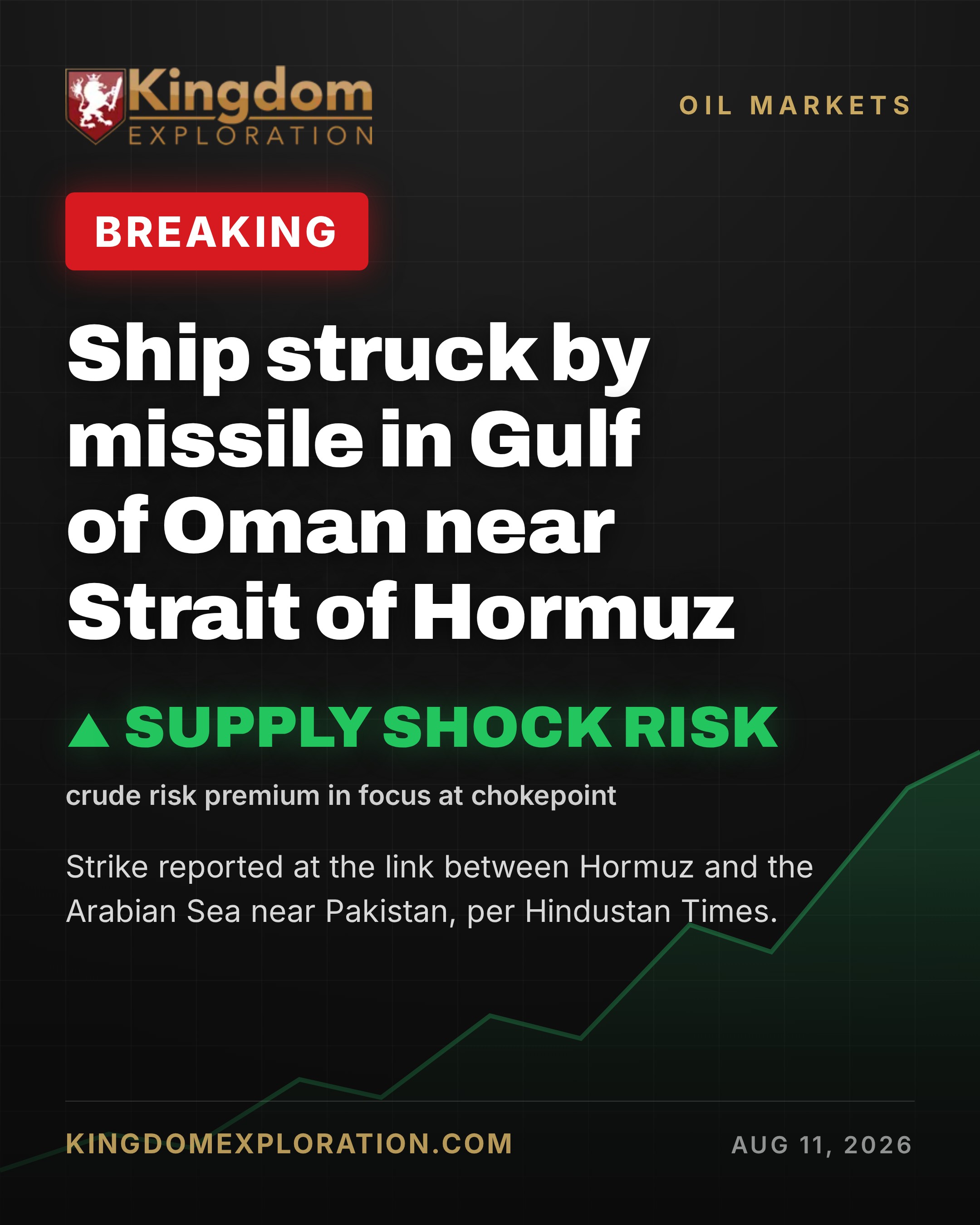
A ship was hit by a missile in the Gulf of Oman, the waterway that links the Strait of Hormuz to the Arabian Sea near Pakistan, according to a report from Hindustan Times published minutes ago. The location places the incident at one of the most sensitive maritime chokepoints in the global energy trade.
What Just Happened
Per Hindustan Times, a vessel was struck by a missile in the Gulf of Oman. The report situates the strike in the corridor connecting the Strait of Hormuz to the Arabian Sea, in waters near Pakistan. The Gulf of Oman functions as the immediate outlet for tankers exiting the Persian Gulf, making any attack in this zone an instant concern for shippers, insurers and crude buyers worldwide.
Details beyond the reported strike location remain limited as the story develops. No confirmed figures on casualties, cargo, vessel type or responsible party have been detailed in the initial report.
The Numbers
The initial report does not carry specific figures for barrels affected, casualties or price moves. What is established is the geography: the Gulf of Oman sits directly on the seaward side of the Strait of Hormuz, the single most important artery for seaborne crude and LNG. A meaningful share of the world's oil transits these waters daily, which is why even a single reported strike here draws immediate market attention.
Why Oil Prices Could Rise
Chokepoint incidents feed directly into the oil market's risk premium. When a vessel is hit near the Strait of Hormuz, traders quickly reprice the probability of wider disruption to tanker traffic. The mechanism is straightforward:
- Supply at risk: The Gulf of Oman is the exit lane for crude leaving the Persian Gulf. A threat to safe passage puts a large volume of daily shipments in question.
- Insurance and rerouting costs: A strike in the corridor can push war-risk insurance premiums higher and prompt owners to slow, reroute or pause transits, tightening effective supply.
- Risk premium: Even without a confirmed loss of barrels, markets tend to build a premium into crude prices to reflect the elevated chance of escalation at a chokepoint of this importance.
Kingdom Exploration's read: the location does the heavy lifting here. A missile striking a ship at the mouth of Hormuz is precisely the kind of event that moves the risk premium before any hard numbers are confirmed, because the market cannot afford to wait to find out whether it spreads.
What to Watch Next
- Confirmation and attribution: Independent verification of the vessel, its cargo and who launched the missile.
- Tanker traffic response: Whether shipping lines slow or reroute transits through the Gulf of Oman and Strait of Hormuz.
- Insurance markets: Any move in war-risk premiums for vessels in the corridor.
- Official statements: Responses from regional governments and naval forces operating in the area.
- Price action: How Brent and WTI open and trade as details firm up.
Reporting sourced from hindustantimes.com. Developing story.
About Kingdom Exploration
Kingdom Exploration LLC is an Oklahoma-based oil and gas exploration company. Learn more at kingdomexploration.com.