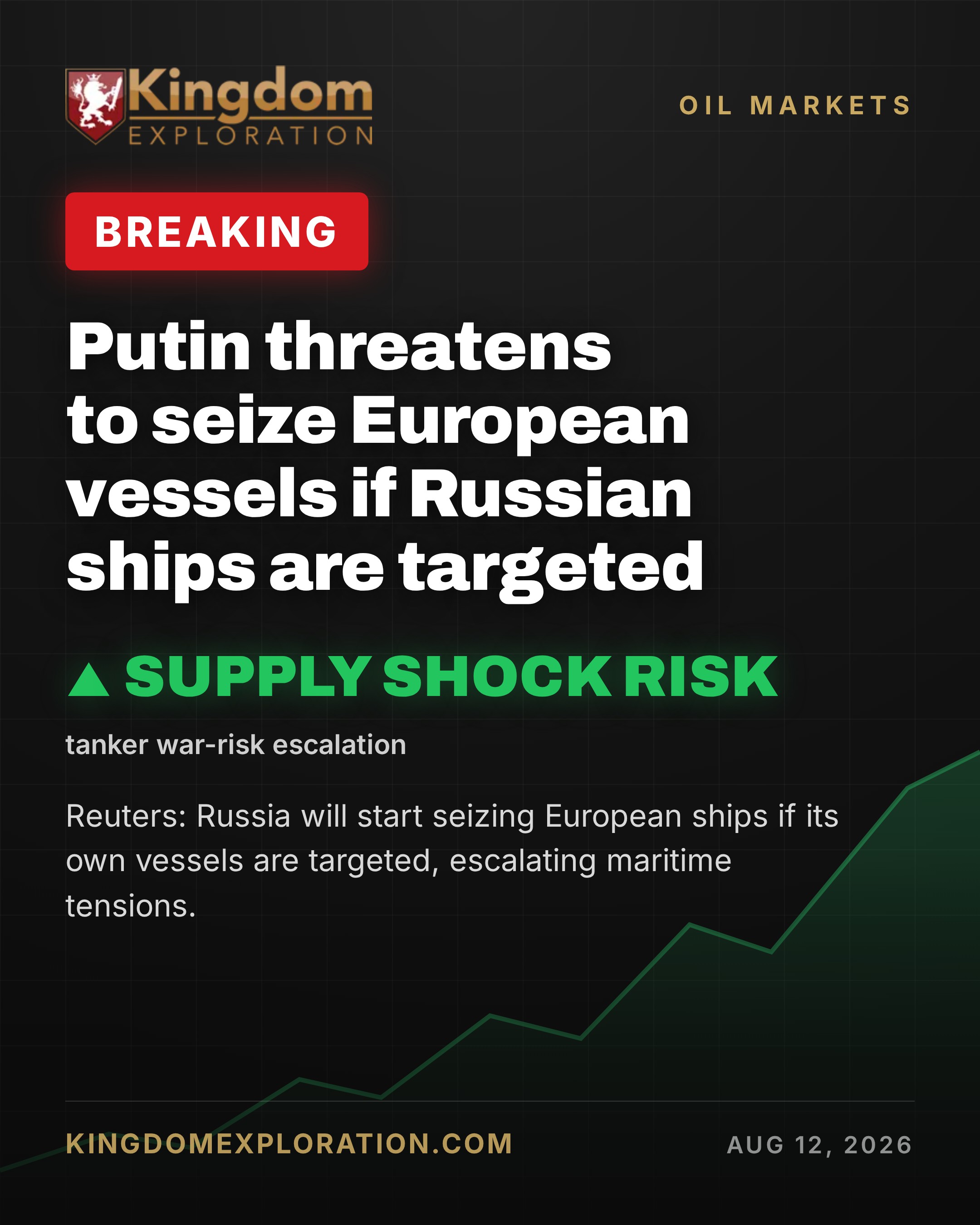
Russian President Vladimir Putin said Russia will begin seizing European vessels if its own ships are targeted, Reuters reported, in a threat that raises the stakes for commercial shipping and the crude tankers that move oil through contested waters. The remarks were published roughly eight minutes before this writing.
Related coverage: Tankers FLEE Kazakh Crude Loadings After Black Sea Hits
What Just Happened
According to Reuters, Putin declared that Russia would respond to any targeting of its ships by seizing European vessels. The statement escalates an already tense maritime environment and directly threatens the freedom of commercial navigation in waters where Russian and European shipping interests overlap.
The threat lands as tankers have already been steering clear of certain loading points following earlier Black Sea strikes on shipping. A move from disrupted loadings to a state-declared policy of vessel seizure marks a sharp escalation in how governments are treating merchant traffic as a lever of conflict.
The Numbers
The source provides no specific figures on vessels affected, cargo volumes, or price moves. Reuters reported Putin's statement of intent; no count of ships, tonnage, or timeline was given. We will not estimate figures the source did not provide.
What is established from prior coverage is directional: tankers have already avoided Kazakh crude loadings after Black Sea attacks, signaling that shipping operators are pricing in real risk before any seizure policy takes effect.
Why Oil Prices Could Rise
Oil is a seaborne commodity. Anything that threatens the safety of tankers or the vessels around them feeds directly into the risk premium embedded in crude prices. Here is the mechanism:
- Insurance and war-risk premiums: A stated threat to seize European vessels pushes marine insurers to widen war-risk zones and lift premiums, raising the delivered cost of oil.
- Rerouting and delays: If owners avoid contested lanes, voyages lengthen, effective tanker supply tightens, and freight rates climb - costs that flow into the barrel price.
- Supply at risk: Crude and product cargoes caught in a seizure standoff can be delayed or stranded, tightening physical availability in affected markets.
- Headline risk premium: Traders tend to bid crude higher when a nuclear-armed state threatens to commandeer commercial ships, because the tail risk of broader disruption rises.
Kingdom Exploration's read: the danger here is less about a single seized ship and more about the chilling effect on tanker traffic. When operators and insurers treat entire sea lanes as hostile, oil moves slower and costs more - even if not a single additional shot is fired.
What to Watch Next
- Any concrete Russian action - a named vessel detained or boarded - which would turn rhetoric into a market event.
- Marine war-risk insurance notices and expanded high-risk zone designations from underwriters.
- European government responses, including naval escorts or countermeasures that could deepen the standoff.
- Tanker tracking data showing rerouting or slowed loadings at Black Sea and connected terminals.
- Freight rate moves for the affected routes, an early tell for delivered crude costs.
Reporting sourced from Reuters. Developing story.
About Kingdom Exploration
Kingdom Exploration LLC is an Oklahoma-based oil and gas exploration company. Learn more at kingdomexploration.com.

