Live Updates
UPDATE — Sep 10, 7:12 AM CT: Saudis report output slumped to lowest since 1990, per Bloomberg
Saudi Arabia has told OPEC that its crude output slumped again, falling to the lowest level since 1990, Bloomberg reported. The disclosure adds fresh weight to earlier survey data showing the group's supply shrinking as the Iran conflict disrupts regional flows.
The figure marks a more than three-decade low for the kingdom, OPEC's largest producer and traditional swing supplier. Bloomberg attributes the numbers to submissions the Saudis made to the cartel.
Kingdom Exploration's read: with the world's top exporter reporting output at levels last seen 35 years ago, the market loses a key buffer just as war-risk premiums build. Any confirmation of a sustained slump tightens an already jittery physical crude market and keeps upward pressure on prices.
UPDATE — Sep 8, 9:07 AM CT: OPEC output slumps as conflict curbs Saudi flows, Bloomberg survey shows
OPEC crude production has slumped, with the Iran conflict curbing flows from Saudi Arabia, according to a Bloomberg survey reported by Bloomberg.com. The finding points to real barrels coming off the market even as the group's formal policy keeps output targets flat.
Kingdom Exploration's read: a survey-measured drop in actual OPEC supply is more immediate for prices than headline quota decisions, because it reflects barrels already missing from the market. With Saudi flows affected amid the war, the supply cushion tightens further, adding upward pressure on crude at a moment traders are already pricing in Middle East risk.
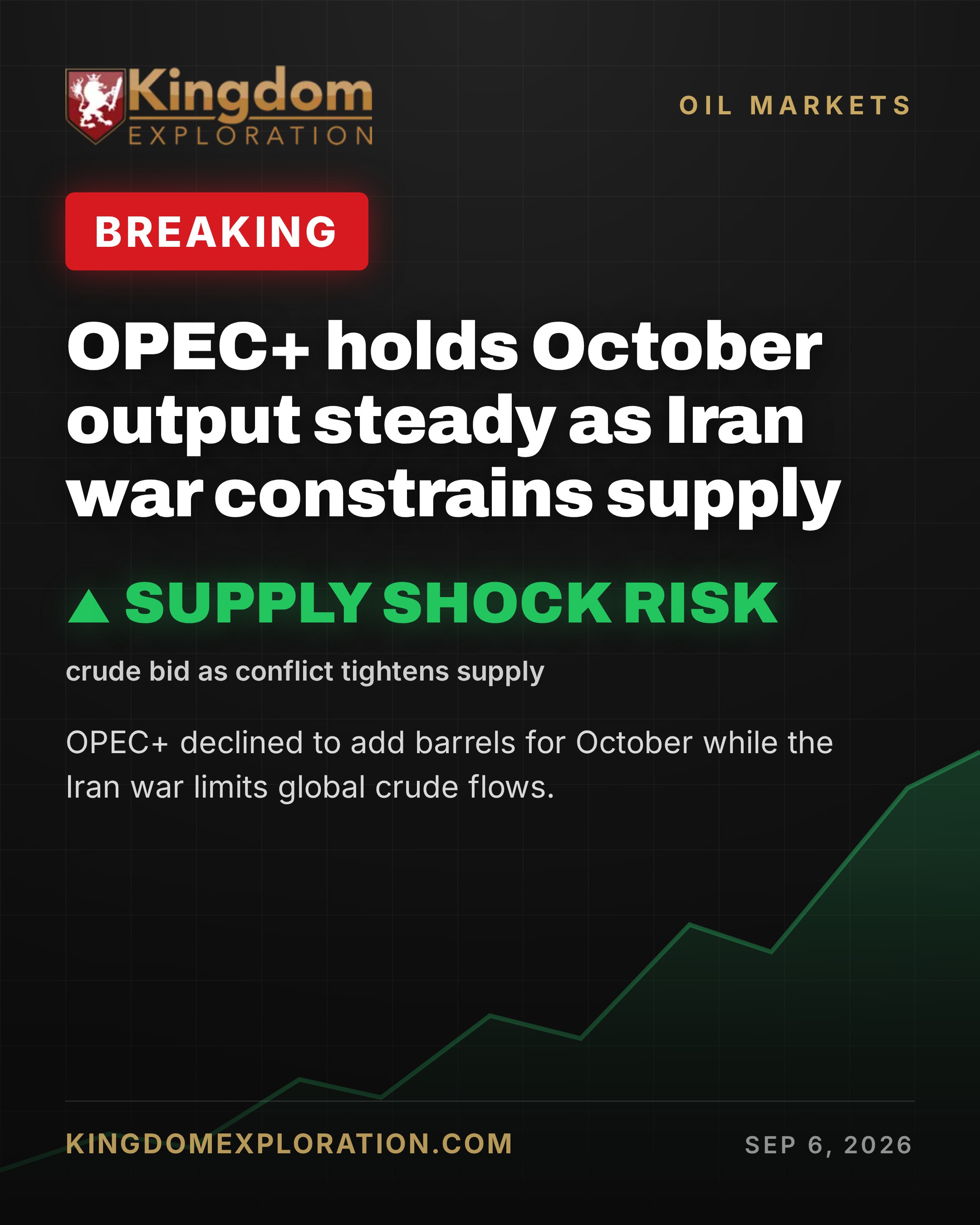
OPEC+ has decided to keep its October crude output steady, a move that lands as the Iran war continues to constrain global supply, Seeking Alpha reported. The producer group opted against loosening its taps even as conflict-driven risk keeps a bid under the market.
What Just Happened
According to Seeking Alpha, OPEC+ chose to hold its October production levels unchanged rather than adding or trimming barrels. The backdrop is a war involving Iran that is limiting the flow of supply into an already tight market. With the group standing pat, the burden of balancing the market shifts squarely onto geopolitics.
Kingdom Exploration's read: a steady quota during an active regional war means OPEC+ is not rushing to backfill any barrels lost or threatened by the conflict, leaving less cushion if the situation worsens.
The Numbers
OPEC+ set October output to hold steady - no announced increase or decrease to the group's collective quota. Beyond the flat production decision and the ongoing Iran-related supply constraint, no additional figures were provided in the source reporting.
- October OPEC+ output: held steady (unchanged)
- Supply backdrop: constrained by the Iran war
Why Oil Prices Could Rise
A steady OPEC+ quota removes the possibility of a near-term supply boost that could have cooled prices. At the same time, a war involving Iran - one of the world's significant crude producers and a key player near critical shipping lanes - raises the risk premium baked into every barrel.
When the market's swing producers decline to add barrels while a conflict threatens existing supply, the balance of risk tilts toward higher prices. Any actual disruption to Iranian output or regional shipping would have to be absorbed by spare capacity that OPEC+ has now signaled it is keeping in reserve rather than deploying.
What to Watch Next
- Any escalation or de-escalation in the Iran war that changes the volume of crude at risk.
- Whether OPEC+ signals flexibility to release barrels if a supply shock materializes.
- Movements in shipping and insurance around key regional export routes.
- Follow-on commentary and confirmed production data from OPEC+ members.
Reporting sourced from Seeking Alpha. Developing story.
About Kingdom Exploration
Kingdom Exploration LLC is an Oklahoma-based oil and gas exploration company. Learn more at kingdomexploration.com.

