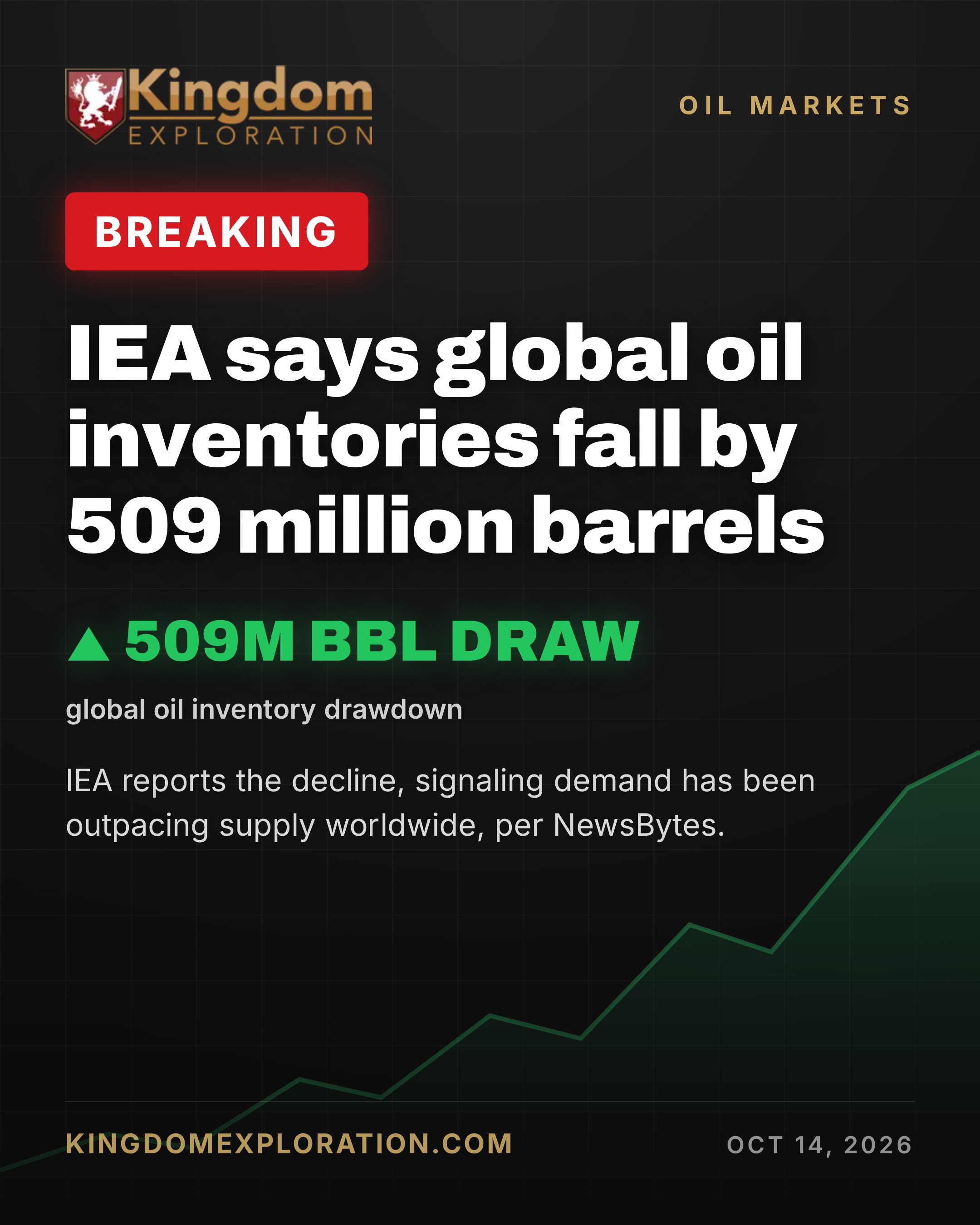
The International Energy Agency (IEA) says global oil inventories have fallen by 509 million barrels, according to NewsBytes. The figure points to a substantial drawdown in the world's crude and products stockpiles, a signal closely tracked by traders because tighter inventories typically leave markets more exposed to supply disruptions and demand swings.
What Just Happened
Per NewsBytes, the IEA reported that global oil inventories have declined by 509 million barrels. Inventory data is one of the most important barometers the energy market watches: it reflects the running balance between how much oil is being produced and how much is being consumed. When stockpiles fall sharply, it indicates demand has been outpacing supply, drawing down the cushion of barrels held in storage around the world.
The IEA, based in Paris, compiles oil market data from its member countries and publishes closely followed monthly assessments of supply, demand, and inventories. A drawdown of this scale is the kind of data point that reshapes how traders think about the balance of the market.
The Numbers
- 509 million barrels — the reported decline in global oil inventories, per the IEA via NewsBytes.
No additional figures — such as the time period over which the draw occurred, regional breakdowns, or price moves — were provided in the available reporting. As this is a developing story, those details may follow as the full IEA assessment circulates.
Why Oil Prices Could Rise
Inventory drawdowns matter because storage acts as the market's shock absorber. When global stocks are high, an unexpected outage or a demand surge can be met by pulling barrels out of tanks, keeping prices relatively calm. When inventories fall, that buffer thins.
A 509-million-barrel decline suggests the market has been consuming more than it produces, tightening the physical supply picture. Tighter inventories tend to:
- Reduce the cushion available to absorb supply disruptions, which can lift the risk premium baked into crude prices.
- Signal firmer underlying demand or constrained supply, both of which support higher prices.
- Increase sensitivity to any further bullish headlines, from geopolitical flare-ups to production shortfalls.
Kingdom Exploration's read: a drawdown of this magnitude is the kind of structural signal that keeps a floor under crude. With less oil sitting in storage, the market has less room to shrug off the next supply surprise — and that can translate into a more responsive, upward-leaning price environment.
What to Watch Next
Traders and analysts will be looking for the full context behind the IEA figure: the time frame of the drawdown, which regions drove it, and whether it reflects crude, refined products, or both. Weekly U.S. inventory reports and OPEC output data will help confirm whether the tightening trend is continuing. Any further draws would reinforce a bullish supply narrative, while a sharp rebuild would ease it.
Also worth monitoring: how producers and spare-capacity holders respond. Persistent drawdowns can prompt additional output, while continued tightness without a supply answer keeps upward pressure on prices.
Reporting sourced from NewsBytes. Developing story.
About Kingdom Exploration
Kingdom Exploration LLC is an Oklahoma-based oil and gas exploration company. Learn more at kingdomexploration.com.

