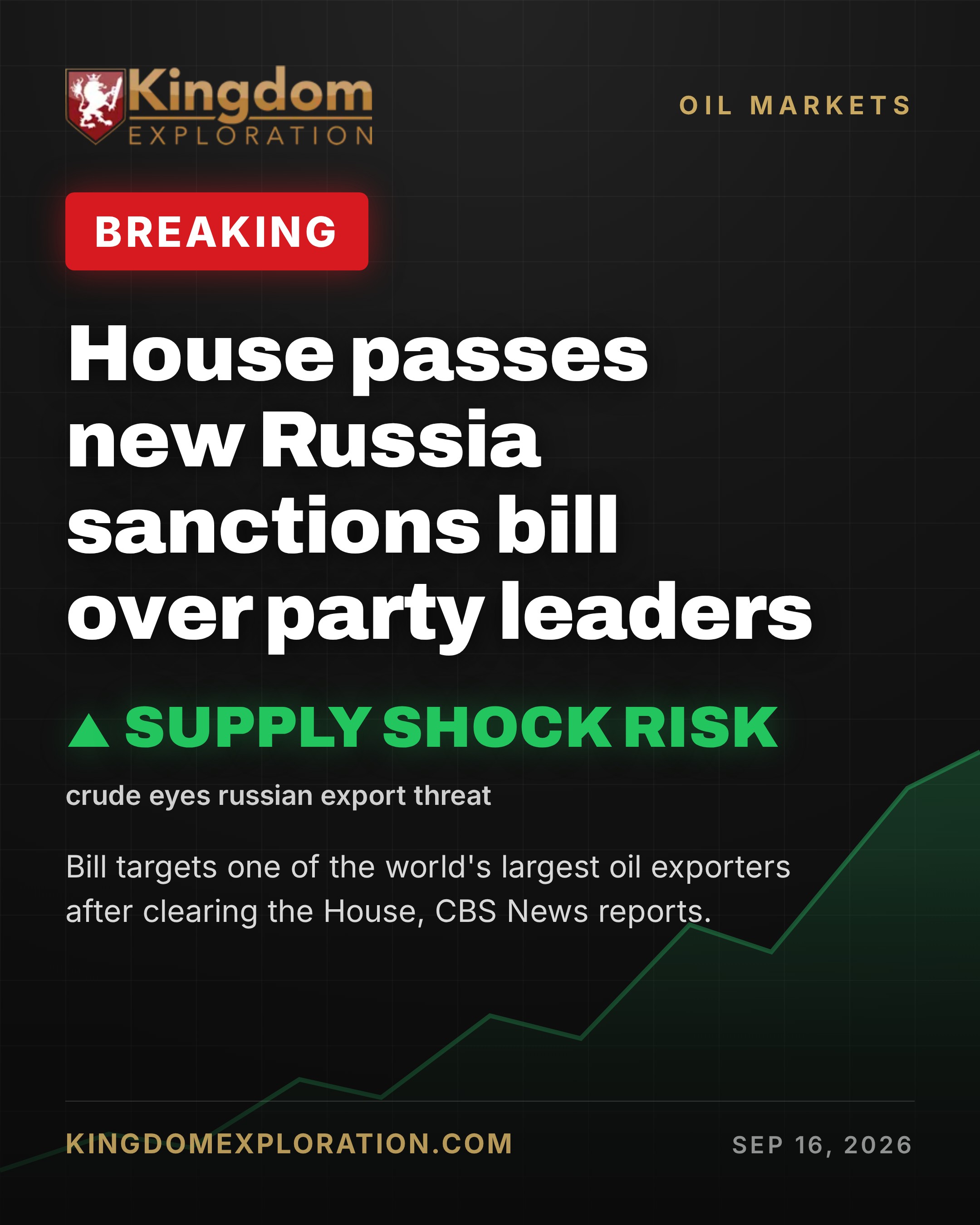
The U.S. House of Representatives has passed a bill to impose new sanctions on Russia, pushing the measure through despite opposition from Democratic leaders, CBS News reports. The vote adds fresh momentum to Washington's effort to tighten economic pressure on Moscow, and it lands squarely on the radar of an oil market that watches every threat to Russian crude flows.
What Just Happened
According to CBS News, the House cleared a Russia sanctions bill after overcoming resistance from Democratic leadership. The legislation advances the U.S. sanctions agenda targeting Russia, one of the world's largest crude oil and refined product exporters. Because Russia sits at the center of global energy supply, any move to expand sanctions carries direct implications for how much Russian barrels reach world markets.
The bill's passage in the House is one step in the legislative process. Its ultimate impact will depend on the final text, Senate action, and enforcement mechanisms - none of which are detailed in the initial reporting.
The Numbers
CBS News's initial report focuses on the political outcome rather than specific figures. No barrel-per-day targets, price caps, or dollar amounts were provided in the summary available at publication. What is clear is the direction: tighter, not looser, restrictions on a top-three global oil exporter.
Why Oil Prices Could Rise
Russia is a pillar of global crude supply. When the United States moves to expand sanctions on Moscow, the market prices in the risk that Russian barrels - whether crude or products - become harder to move, insure, or finance. That risk premium can push prices higher even before any physical barrel is actually removed from the market.
The mechanism is straightforward:
- Supply at risk: Sanctions can disrupt the pathways Russian oil uses to reach buyers, tightening available global supply.
- Risk premium: Traders add a cushion to prices when a major exporter faces new legal pressure and uncertainty.
- Spare capacity: If Russian volumes are squeezed, the world leans harder on the limited spare capacity held by other producers - a thinner cushion means sharper price reactions to any further shock.
Kingdom Exploration's read: legislation alone doesn't pull barrels off the water, but escalating sanctions rhetoric keeps a floor of geopolitical risk under crude. The market tends to react first to the threat and later to the enforcement.
What to Watch Next
- The final language of the bill and which Russian sectors it targets - energy exports specifically or broader financial channels.
- Whether the Senate takes up and passes a matching measure, and the timeline for any signing.
- How enforcement would be applied, including any carve-outs or phase-in periods that affect oil flows.
- Reaction from Russian export terminals, buyers in Asia, and the insurance and shipping markets that move Russian crude.
Reporting sourced from CBS News. Developing story.
About Kingdom Exploration
Kingdom Exploration LLC is an Oklahoma-based oil and gas exploration company. Learn more at kingdomexploration.com.