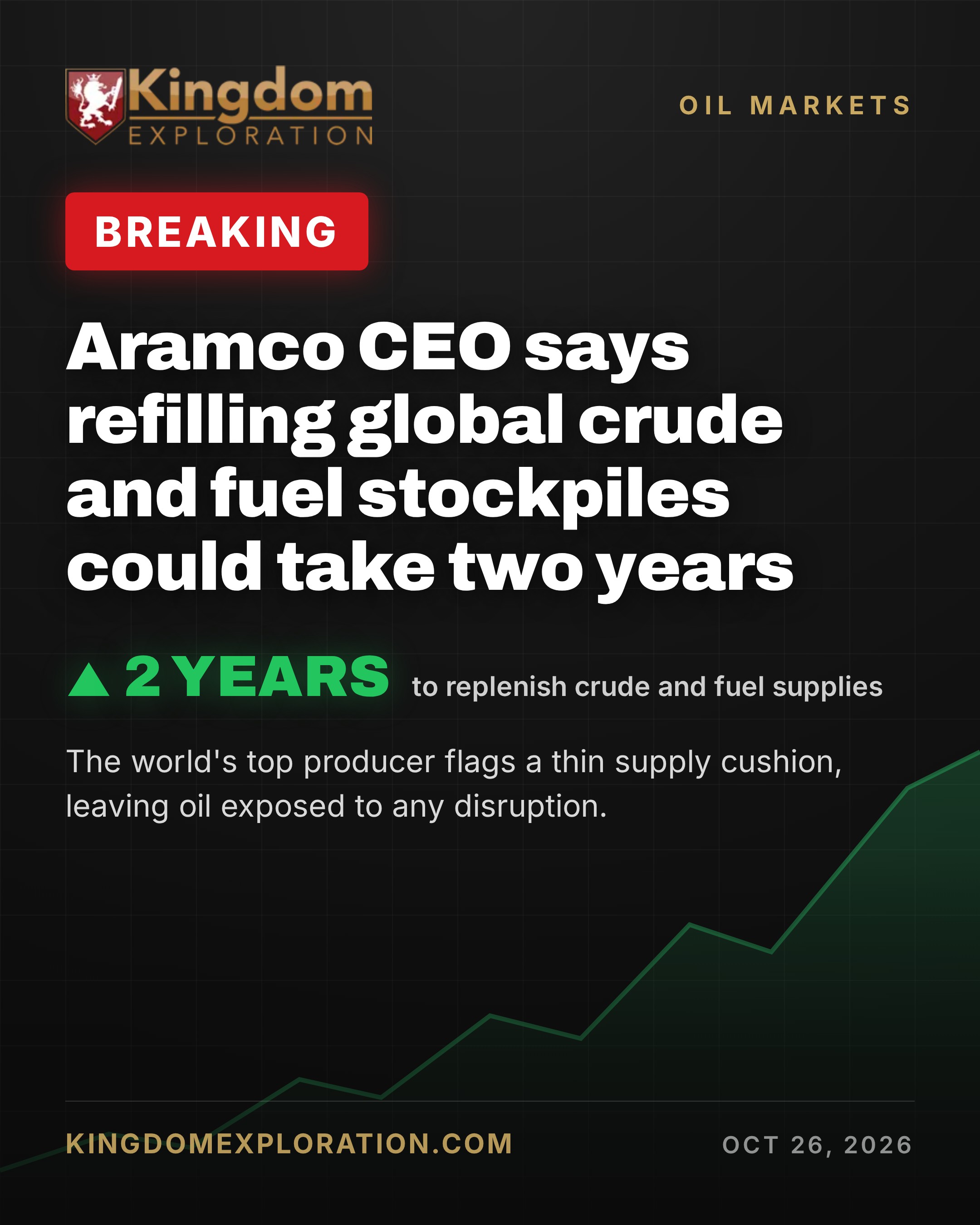
Rebuilding the world's drawn-down crude and fuel stockpiles could take as long as two years, Saudi Aramco's chief executive said, a timeline that underscores just how thin the global supply cushion has become, per EnergyNow.com, which reported the comments within the past hour.
What Just Happened
The head of Saudi Aramco - the world's largest oil producer - flagged that replenishing depleted crude and refined fuel inventories is not a quick fix. According to EnergyNow.com, the CEO put the potential rebuild period at roughly two years, a signal that the buffer markets rely on to absorb disruptions has been worn down and will stay lean for an extended stretch.
For oil investors, the message matters less for what it says about today's price and more for what it says about resilience: when inventories are low, the market has less slack to cover an unexpected outage, outage, or demand spike.
The Numbers
- Up to 2 years - the time Aramco's CEO estimates it could take to replenish crude and fuel supplies, per EnergyNow.com.
The source did not attach specific barrel-per-day or inventory-volume figures to the comments. The headline figure is the two-year replenishment window itself.
Why Oil Prices Could Rise
Inventories are the market's shock absorber. When stockpiles are full, a sudden loss of barrels - from a storm, a pipeline hit, or geopolitical conflict - can be met by drawing down reserves, keeping prices steadier. When stockpiles are thin, the same disruption forces buyers to compete harder for scarce physical cargoes, and prices can climb faster.
A two-year rebuild window implies that any supply interruption over the coming quarters would land on a market with a smaller safety net. That dynamic can lift the risk premium embedded in crude, even before any actual barrels are lost. Low inventories also tend to tighten the physical market structure, which can support prices for prompt delivery.
Kingdom Exploration's read: a two-year runway to refill global stockpiles means the market is flying with less reserve fuel than usual. It doesn't guarantee higher prices - but it does mean every supply scare carries more weight until those tanks are topped back up.
What to Watch Next
- Inventory data: Weekly and monthly stockpile reports will show whether the rebuild is actually underway or stalling.
- OPEC+ output policy: How much the group chooses to produce directly affects how fast inventories can recover.
- Demand trends: Strong consumption competes with restocking for the same barrels, potentially stretching the timeline further.
- Any supply disruption: With a thin buffer, outages could move prices more sharply than they would in a well-stocked market.
Reporting sourced from EnergyNow.com. Developing story.
About Kingdom Exploration
Kingdom Exploration LLC is an Oklahoma-based oil and gas exploration company. Learn more at kingdomexploration.com.

