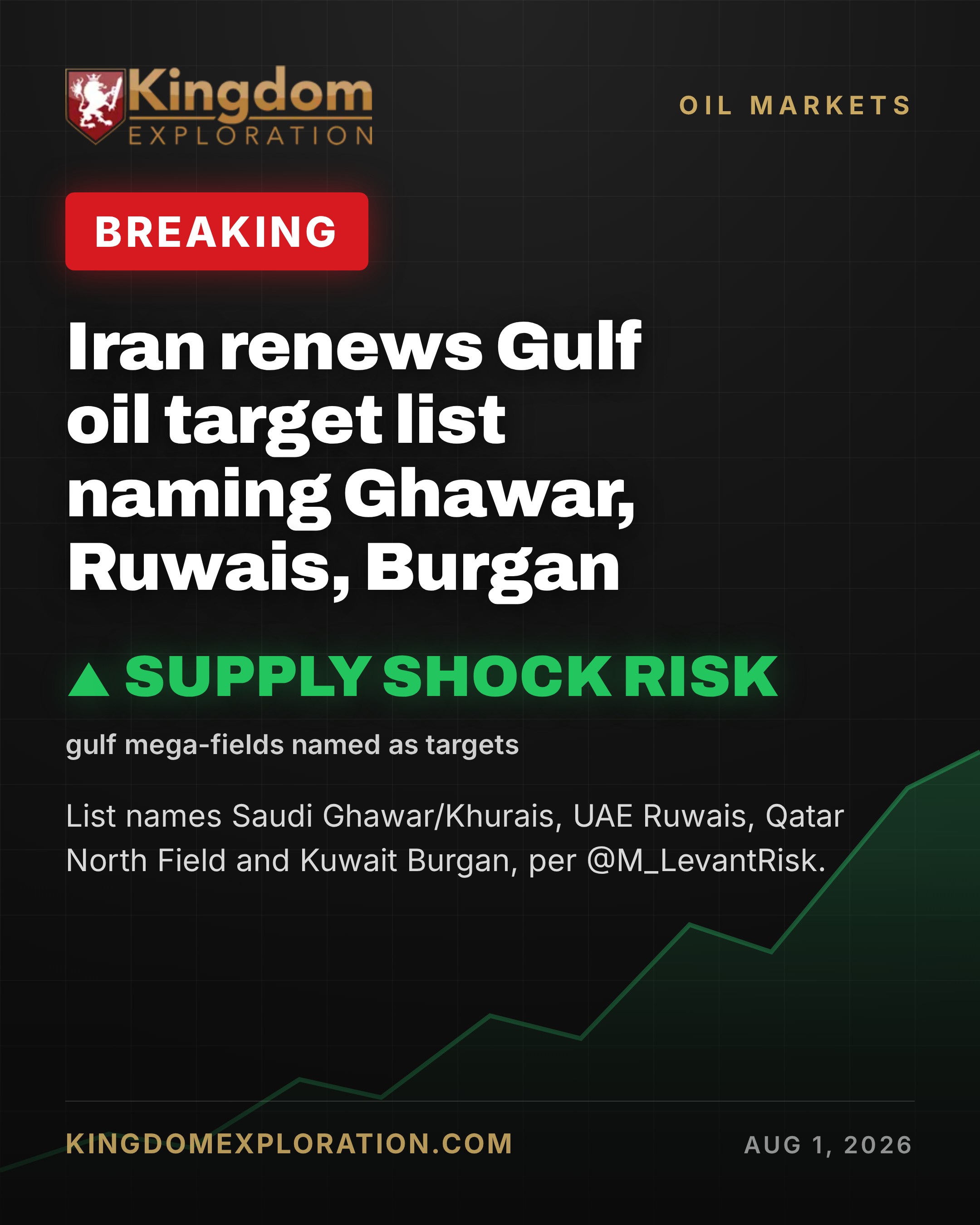
Iran has renewed a list of Gulf oil facilities it is threatening to target, naming Saudi Arabia's Ghawar and Khurais fields, the UAE's Ruwais complex, Qatar's North Field, and Kuwait's Burgan field, per a report from X-based conflict tracker @M_LevantRisk posted minutes ago. The renewed target list raises the specter of a direct threat to some of the most critical crude and gas infrastructure in the world.
Related coverage: US Extends Iran Strikes; Trump Threatens Secret Nuclear Site
What Just Happened
According to @M_LevantRisk, Iran has re-issued a target list explicitly naming key oil and gas assets across the Gulf. The named facilities include Saudi Arabia's Ghawar and Khurais oil fields, the UAE's Ruwais downstream and export hub, Qatar's giant North Field gas development, and Kuwait's Burgan oil field. The renewal of the list comes amid an already escalating confrontation, following US strikes on Iran that we have covered previously.
The report reflects rhetoric and stated intent rather than a confirmed attack. As of this writing, there is no verified report of a strike on any of the named facilities. Kingdom Exploration is treating this as a developing story and reporting only what the source states.
The Numbers
The source did not provide specific figures for barrels at risk, price moves, or damage. What the report does specify is the roster of facilities on the renewed target list:
- Saudi Arabia: Ghawar and Khurais oil fields
- UAE: Ruwais oil complex
- Qatar: North Field
- Kuwait: Burgan oil field
These assets sit at the heart of Gulf production capacity. Any figures on potential volumes offline would be speculative and are not contained in the source, so we do not report them here.
Why Oil Prices Could Rise
The mechanism is straightforward: the facilities named represent a concentration of the world's crude and gas output. When such infrastructure is publicly placed on a target list, markets price in a risk premium even before any physical disruption occurs. Traders weigh the probability of supply loss against available spare capacity, and threats to multiple flagship fields at once compress the margin for error.
The Gulf's export chokepoints and mega-fields are difficult to replace on short notice. A credible threat to Ghawar, Ruwais, North Field, or Burgan touches both crude and LNG flows, widening the potential impact across energy markets. Even absent an attack, elevated threat rhetoric tends to keep a floor under prices and sharpen volatility.
Kingdom Exploration's read: A target list is not a strike, but markets don't wait for confirmation. When the world's largest oil and gas fields are named at once, the risk premium builds first and asks questions later. Watch for official responses and any move in freight and insurance costs.
What to Watch Next
- Official confirmation: Any statement from Saudi Aramco, ADNOC, QatarEnergy, or Kuwait Petroleum acknowledging heightened security posture.
- Physical disruption: Reports of actual strikes, outages, or production changes at any named site.
- Defensive measures: Increased air-defense activity or shipping advisories in the Gulf.
- Price and premium signals: Movement in Brent and WTI, plus tanker insurance and freight rates as a gauge of perceived risk.
The situation remains fluid. This report is based on a single social-media source and should be read as an unfolding development rather than a confirmed event.
Reporting sourced from X @M_LevantRisk. Developing story.
About Kingdom Exploration
Kingdom Exploration LLC is an Oklahoma-based oil and gas exploration company. Learn more at kingdomexploration.com.