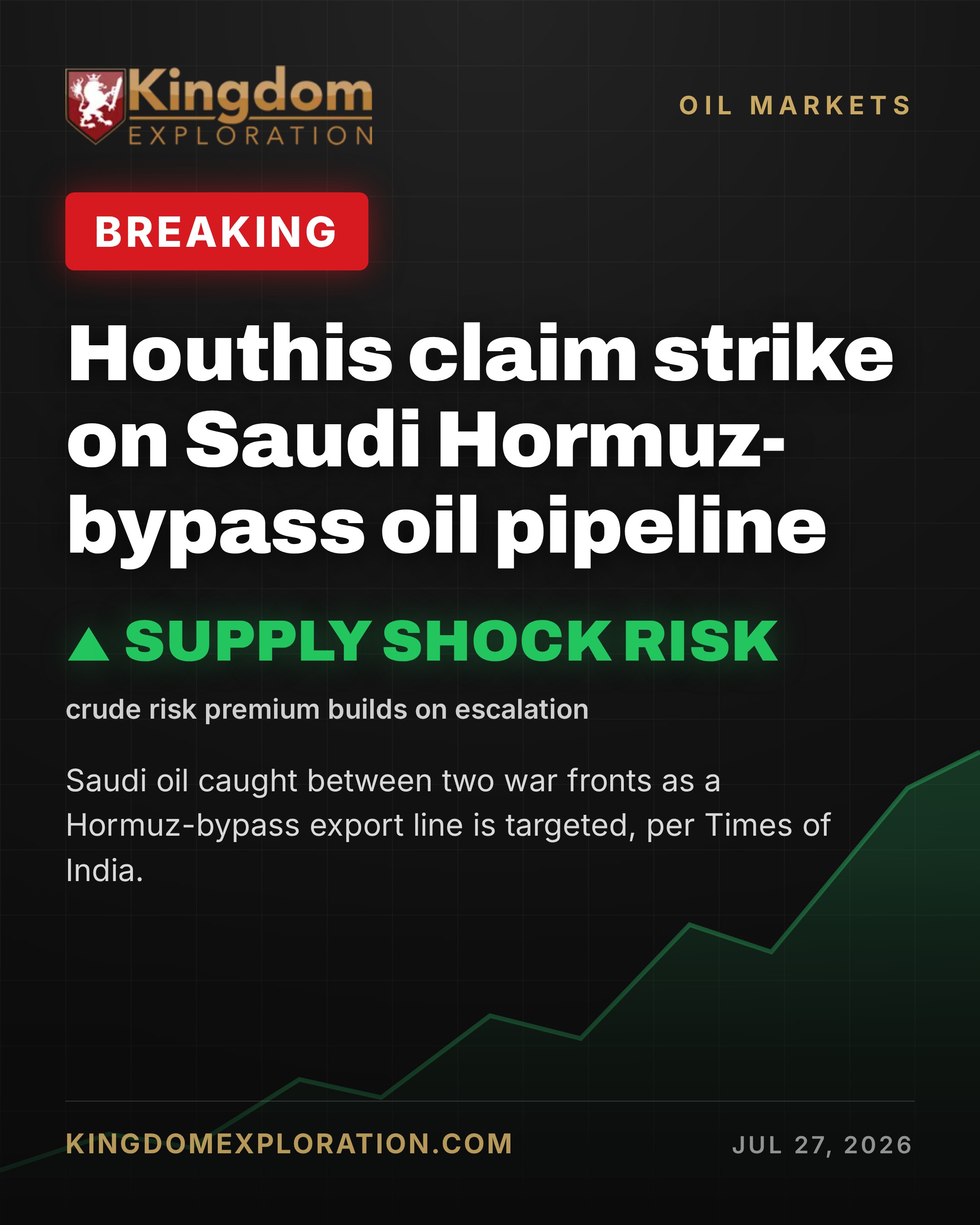
Saudi Arabia's crude infrastructure is caught between two active conflict fronts after Houthi forces claimed they struck a pipeline that serves as a bypass to the Strait of Hormuz, The Times of India reported. The claim, surfacing within the last hour, puts a fresh spotlight on the vulnerability of the region's export arteries and the risk premium building into global oil.
What Just Happened
According to The Times of India, Houthi forces have claimed responsibility for a hit on a Saudi pipeline described as a Hormuz-bypass line. Such bypass infrastructure is designed specifically to move crude around the Strait of Hormuz chokepoint, giving producers an alternate export route that reduces dependence on the narrow waterway. A claimed strike on that line is significant precisely because it targets the redundancy the market relies on when tensions in the Gulf flare.
The Times of India framed the development around Saudi oil being "trapped between two war fronts," underscoring that the Kingdom's energy assets are increasingly exposed to overlapping regional conflicts. As of publication, this remains a developing story, and independent confirmation of the extent of any damage was not detailed in the available reporting.
The Numbers
The reporting available at this stage does not attach specific figures to the claimed strike - no confirmed volumes offline, damage assessments, or price moves were provided in the source. What is established is the strategic weight of a Hormuz-bypass pipeline: these routes exist to carry substantial barrels away from the strait, and any credible threat to them changes the risk calculus for traders even before hard numbers emerge.
Kingdom Exploration will update this article as verified figures - barrels affected, repair timelines, and any official Saudi response - become available.
Why Oil Prices Could Rise
The mechanism here is about redundancy and perception. Hormuz-bypass pipelines are the market's insurance policy against a disruption at the strait, through which a large share of the world's seaborne crude transits. When that insurance policy is itself targeted, the market loses a layer of comfort, and a geopolitical risk premium tends to build into prices.
- Supply at risk: A claimed strike on export infrastructure raises the possibility of reduced flows or precautionary shut-ins, tightening available barrels.
- Chokepoint fragility: If bypass routes are threatened, more crude may be forced back onto the Strait of Hormuz - the very route the bypass was built to avoid.
- Risk premium: Even without confirmed volume losses, escalation between multiple fronts pushes traders to price in the chance of a larger disruption.
- Spare capacity questions: Attacks on infrastructure test how quickly producers can reroute or make up lost throughput.
Kingdom Exploration's read: The strategic value of a Hormuz-bypass line is that it exists to keep barrels flowing when the strait is contested. A credible threat to that line, even absent confirmed damage, is exactly the kind of headline that widens the geopolitical risk premium in crude.
What to Watch Next
Several data points will determine whether this becomes a durable price event or a headline that fades:
- Official confirmation - or denial - from Saudi authorities on any damage and the operational status of the pipeline.
- Any reported disruption to actual crude throughput or export scheduling.
- Whether shipping and insurance costs through the region shift in response.
- Follow-on claims or escalation across the "two war fronts" referenced in the reporting.
- How spot benchmarks and the futures curve respond once markets fully digest the claim.
Until confirmed figures arrive, traders are working off the claim itself and the strategic significance of the target rather than a quantified loss.
Reporting sourced from The Times of India. Developing story.
About Kingdom Exploration
Kingdom Exploration LLC is an Oklahoma-based oil and gas exploration company. Learn more at kingdomexploration.com.